
 My Melodrama


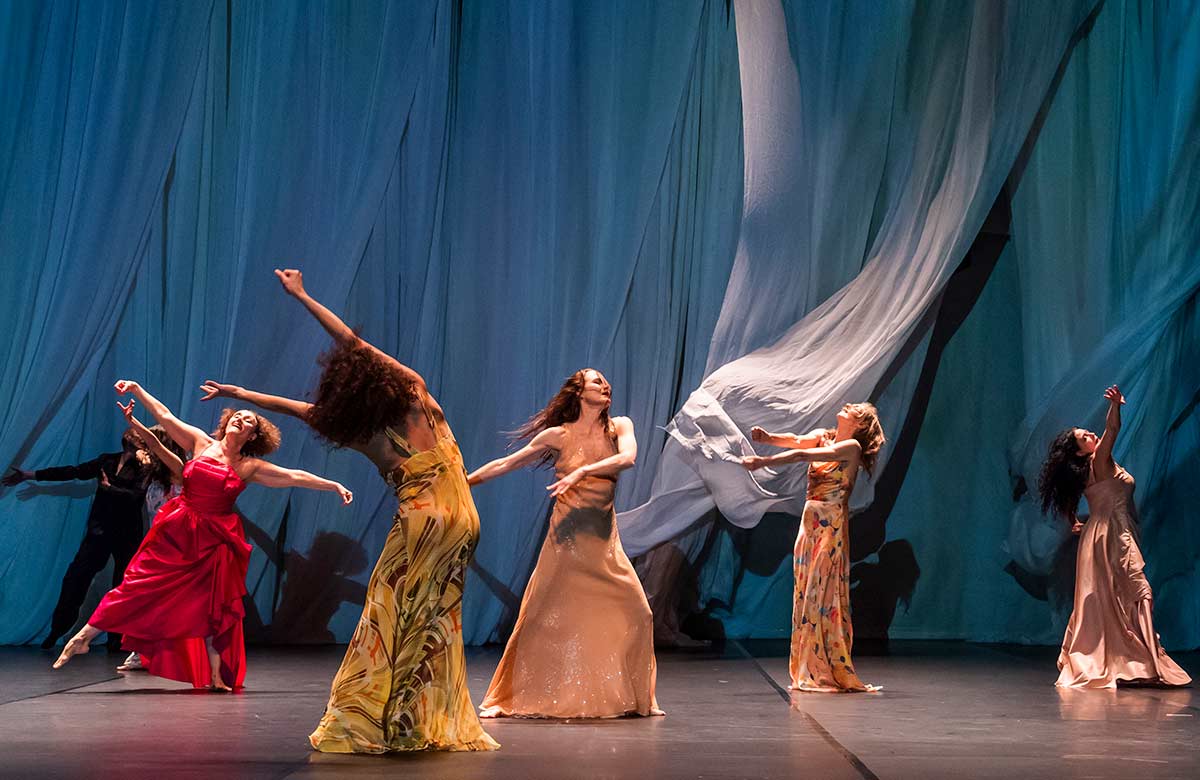

A woman slips away from the party for a moment of blissful solitude. Her champagne-coloured gown wafts gently in the breeze. Behind, long white drapes billow, blown by a large fan offstage - I am reminded of the dream scene...
 Catch while you still can
The penultimate work of one of the most influential and revolutionary choreographers of the 20th century; Pina Bausch makes its long-awaited London premiere. Made in the final years of her life, Sweet Mambo captures desire, fear, laughter (this is considered one of her funniest pieces), and pain. Created in the renowned Tanztheater style (literally ‘dance theatre’ in German) Bausch made famous, this performance lays bare both the sweetness and severity of life. Bausch’s dancers-turned-collaborators bring years of experience to communicate in movement what can’t be said in words.
We believe this is something you just have to experience. Bausch famously stated that she was not interested in how people move, but what moves them. This is is a genre blending dance that is going to make you feel so may things. It doesn’t stop at dance either: emotional drama, speech, and everyday movements are all part of the show here.

Run Time
2 hours 30 minutes

Dates
From: February 18th, 2026
Until: February 21st, 2026
What our culture curators are saying

RECENTLY REVIEWED
The Cherry Orchard
London
“Gilding the Cherry The Cherry Orchard is one of my favourite plays, so I was a little irritated by the realisation that Conor McPherson felt he could improve on Chekhov. I am not convinced that Chekhov needs to be fiddled around with, but then I like my nostalgic melancholia straight up, exquisite with eastern sorrow; I do not like change, and my tastes may not be yours. Having already seen the play four times, I was a little confused by this upbeat version and the inclusion of so much physical theatre. Surely this was a tragedy where we meet the aching void. Apparently not - it’s now a comedy, although, turning all my thoughts inside out and round and round, I decided it was a Russian comedy, i.e. dark and tragic! The stage looked charming. Ms Scott Thomas is one of the greatest actresses of our time, and it is always a privilege to see her in the theatre. The play was still good, with enchanting infusions of commedia dell’arte pastels and guitar. These vignettes of physical theatre, almost like a play within a play, were seductive and smart, but it was not The Cherry Orchard as I know it, and although there were flashes of tragedy in Ms Scott Thomas’s absent-minded middle distance, I was hoping for more. The real magic of The Cherry Orchard did not really arrive until the final scene with Firs, the faithful and abandoned servant, who brilliantly achieved the critical tension between comedy and tragedy, and it was remarkably powerful: dry, tragic and exquisitely sad.”
Man to Man
London
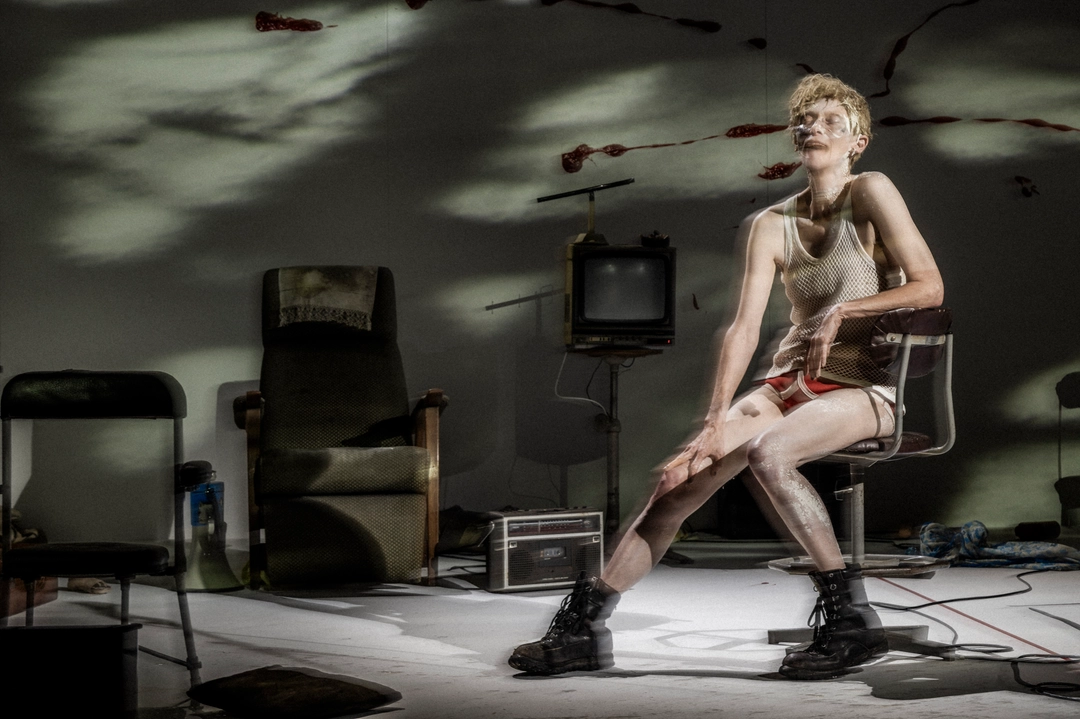
“For 90 spellbinding minutes on Friday, Ms Swinton captured her audience like no other. I have had the thrilling opportunity to see other great actresses in London these past couple of weeks, and I can confirm that in my mind Ms Swinton is on another level. This was the best theatre I have seen in a while. It’s not Ms Swinton’s first stab at Manfred Karge’s character Ella/Max, whose script is almost like T.S. Eliot - a hard-hitting stream of consciousness. Of course Ms Swinton was preaching to the converted, as I loved Orlando, but after watching the terrible recent Marianne Faithfull documentary I was less confident, worried that she had become a victim of her own hype. My worries were allayed: here was Ms Swinton at her finest; she was better than ever and a complete performer. What is so incredible is how out of character she was, and yet she was absolutely in her comfort zone returning to this role and perhaps her younger punky self. Obnoxiously scrawny in red Y-fronts with a rabbit’s foot in her pants, she was having a wonderful time, and I found the moment with the ketchup both relatable and clever. It’s hard to know if she is styled as an Egon Schiele painting or representing someone with serious skin and hygiene problems, but either way the repugnance worked like a charm. There were moments when she held the whole audience’s attention with her silence, this tease sometimes lasting minutes, and this mastery of the audience is what makes the performance phenomenal. Whoa! Stop the world. NYC, beg, borrow or steal those tickets; in London, come along last minute and see if you can get a standing ticket - charm the lovely lady in the box office - do what it takes, this is worth seeing.”
Who’s Afraid of Virginia Woolf?
London
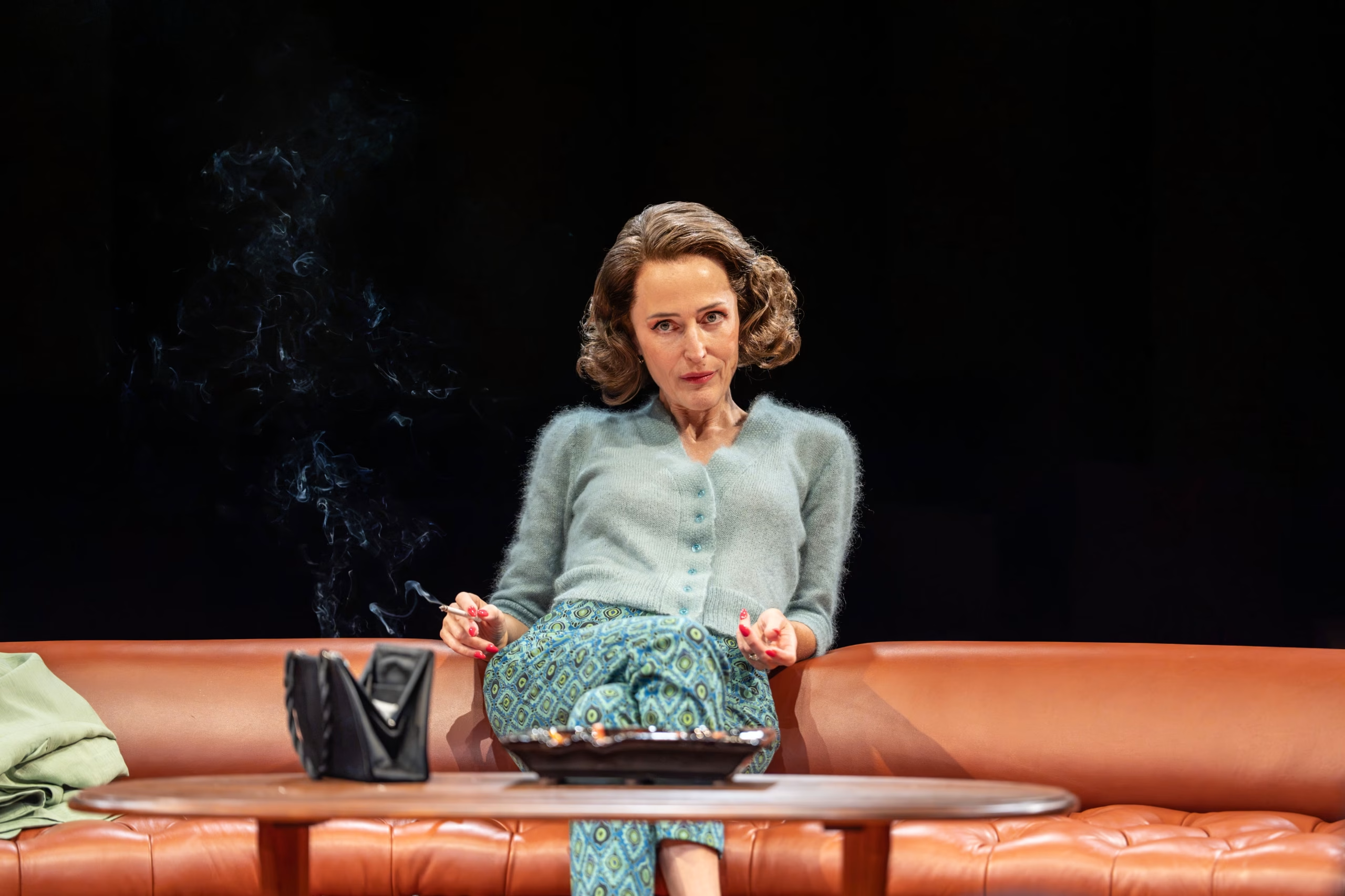
“Bartender, Please Make That a Double. Everyone should see Who’s Afraid of Virginia Woolf? once, but is it better the second time? This question occupied my mind last week and had me in a spin - ‘should I or should I not go?’ On one hand, it really is quite hard on the nerves, but how could I resist such an all-star cast - Gillian Anderson at her finest. Ultimately it felt bad to be rude, so I decided to go, and as we walked to the theatre I merrily joked with my co-curator about straitjackets being carefully stowed under the seat in case of emergency. This production is certainly worthy of the hype. Under the direction of Marianne Elliott, this incredible cast was agile enough to go beyond the script’s machine-gun fire of killer lines to give a superb performance of nuanced sensitivity that gave humanity, coherence, poise and even moments of tenderness to the seriously sick see-saw of George and Martha’s marriage. My one criticism is that the characters did not seem drunk. The energy (and God knows where they get it from) was exhilarating, and if the performance was torture - it was of the most divine kind. My decision to take a whisky in the first interval was inspired “audience participation”, and one which I would fully recommend. The quick change in relationship dynamics and brutalisation of truth, which cut through comforting lies to the heart of the characters’ vulnerability, made compelling theatre, and on Friday the entire cast was superb. This raw exposure of private wounds was reinforced by the slowly turning stage - surely emphasising that there were no hidden corners, when in fact a significant part of the audience response was the collective wish that there could be, just one. About halfway through, I excitedly grabbed my fellow cultural commentator’s notebook and scribbled the words “Francis Bacon”, and we silently nodded in conspiratorial agreement. Was it the colour of the mid-century modern set, the circular stage, the flayed emotional rawness of the script, or the fact that my consciousness is currently farmed out to that particular artist? Or perhaps, because I am an art writer, it was the best way for me to convey what I understood. But it was almost as though Bacon had painted an unlikely heteronormative group portrait in which the conflicting energy was so potent that it unfurled itself off the canvas and played out before our eyes in three and a half hours of measured sickness. Who’s afraid of Virginia Woolf? Not me - I am ready for the drink-along matinee!”
Share a commentWe’d love to hear your thoughts