
 My Melodrama

 Catch while you still can
QWEEN JEAN ON THE RADICAL SPIRIT OF CATS: THE JELLICLE BALL
The ecstatic, high-energy revival of Cats: The Jellicle Ball at the Broadhurst Theatre in New York reimagines the feline competition at the heart of the show’s episodic string of character numbers as a night in the New York City ballroom scene. Glamour cats of all stripes strut their stuff in the hopes of being named “The Jellicle Choice,” an homage to the generations of self-made ballroom performers that is both fierce and tender. In this interview, the show’s celebrated costume designer and activist Qween Jean talks to Kate Purdum about how her work designing on Broadway is “dedicated to the legacy” of her ancestors who “had to quite literally fight for a space in this world.”
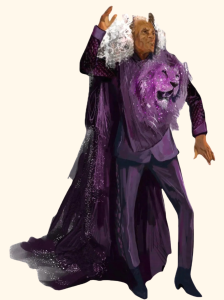
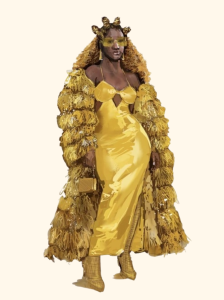
The fabulous and endlessly dynamic costumes are the result of intimate collaboration between Jean and the performers: “This is the Olympics, darling, of performance!” The artists had a whole year to come up with their “effects”—the term for visual presentation in ballroom—and the result is a unique visual world for each artist that very much honors the authentic history of the community.
Qween Jean’s hope that every audience member feels like they are part of a magical ball at the Broadhurst Theatre every night is well and truly realized through a production that personifies the idea that “joy is human medicine that can heal even the most broken heart.”
Cats: Jellicle Ball at the Broadhurst Theatre is on through September 6.
 new york

Kate Purdum: I’m so excited to talk to you, this is fantastic. I would love to hear about your journey to Cats: Jellicle Ball. Tell me the whole story!
Qween Jean: I will definitely say, like a lot of young people, I grew up with the Cats soundtrack, and I fell in love with the music right away. As a young creative, I was always so moved by the story and the possibility of anyone being selected as the ‘Jellicle Choice.’ I was immediately drawn to that community, never knowing that one day I’d actually belong to it—that I’d be called upon to show up, address them, and really illuminate the dramaturgy of the story through my work.
It’s been such a moving and inspiring thing to reflect on that journey while actively contributing to this process. I remember so many weekends as a kid, putting my little hair up and just singing ‘Memory’. Ha! I think that nostalgia is our unified principle; it’s what theatergoers and audiences at the Broadhurst Theater are so excited for. We share this deep love for these characters, and I’m just excited for people to fall in love with this community and this music all over again.
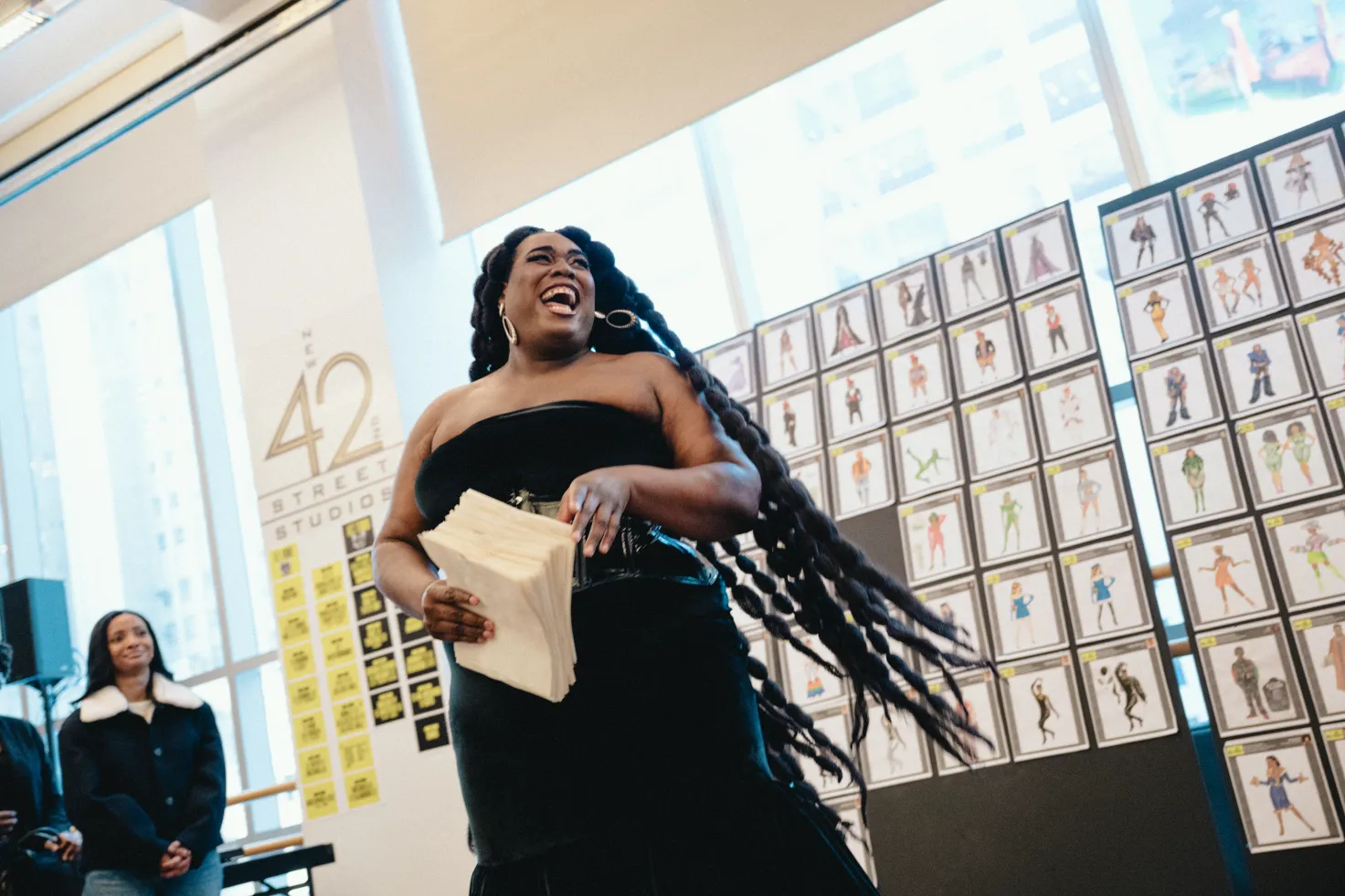
KP: Speaking of that love and community, I was at the first preview the other week. It was easily the most joyful Broadway audience I’ve ever been a part of. So loving, energetic, and celebratory. It felt like every single person in that theater was just dying to be there and loving every minute of it, so congratulations on really crafting that space of gorgeous joy. I also wanted to shout out a beautiful moment before the show started: as you were crossing to your seat, you received this incredible wave of applause and reverence from the crowd. I want to know how that felt for you, what that kind of recognition feels like, and what it means to you to be a part of this production as it gets its flowers in such a specific, insider way.
QJ: Oh my gosh, Kate, I’m trying not to cry. That moment was really, really special. Simply put: I am the community that I serve. It has been just magical to see people respond and see themselves reflected. It’s been so powerful to see people realize for the first time that there is a whole other world—a whole other ecology of artists, movers, thinkers, and storytellers that have always been here.
We know this was birthed from the New York City ballroom culture of the early eighties, and it has created a global movement for transformation, story, and music. More specifically, it’s a global response asserting that queer and trans people are here, and to be a part of that is deeply monumental.
I love being able to create wardrobe; I think clothes are a source of love and can be a tool for survival. Especially in an environment where you have to compete and present your best self, clothing is a crucial element. To have received that love from the audience as a costume designer—I’ve never experienced or seen that before. In that moment, the only thing I could say was: ‘Thank you for seeing me’. Thank you for believing that the fight our ancestors fought was not only necessary, but that it has changed all of our lives. As a young Black trans woman designing on Broadway—at a time when many of our ancestors were not received and had to quite literally fight for a space in this world—my work remains dedicated to that legacy. As the founder of Black Trans Liberation, we are dedicated to creating fellowship and community space for people to exist, to eat, to dance, to vogue, and to just be.
KP: That’s beautiful. I’m curious—ballroom being this sacred space, this historically laden form—what does it mean to you to bring this mode of storytelling to Broadway? It’s personal to so many and has such a weighted history for queer, Black, and trans people. Now it’s reaching a mainstream audience, do you have any anxieties or complicated feelings about sharing this specifically grounded world with an audience who might not understand what they’re seeing? And what are your hopes and fears about having so many different eyes on a work like this?
QJ: This is a real poignant question, and I think it resonates because knowing the history, often when people share culture or invite others in, history has shown us that not everyone has the same respect or reciprocity about honoring a humanity outside of their own. For us, it has been a very crucial and intentional thing: we are meeting the work with intentional care. Ultimately, we are inviting people to strengthen and fortify all of our communities. We’re hoping to bring people together.
This is a call for unification, for love, and for family. Our families reflect just as much as our neighbors’ families. An administration or political powers should not be able to dictate whose life or family is worthy of protection, accessibility, or resources. For us, it’s about revealing to the world that our love is just as sacred. The young people coming to see this—this might be their very first Broadway production. This might be their first time seeing the iconic Grizabella take the stage and pour her soul out. Every artist is doing that; they’re being very vulnerable with this work in an earnest way. We’re excited about the possibility of bridging all humanities together so that we may be allies and co-conspirators. Even as we leave the theater and meet people in the real world, we can meet them with kindness, advocate for them, and be a soft place for them to land. Joy is human medicine that can heal even the most broken heart.
KP: Wow, gorgeous. Now I’m going to have to try not to cry! I wanted to take it back to the costumes for a second because they’re just insane. I can’t even count the number of huge reveals, quick changes, and onstage transitions. Plus, everyone needs to be able to really dance—they aren’t just doing a “step-touch,” they are dancing their hearts out. From a technical standpoint, how do you build such a visually layered world that also has to evolve? And how much are you working with individual performers to tailor clothing to their movements and their vision of the character?
QJ: Thank you, thank you! This question speaks to the innovation of ballroom culture and the innovation of storytelling. My God, when you go to a ball, I’m always in awe of the creativity in our community and how people respond to a prompt or category. The levels of imagination are unbound. Translating that into this Broadway production was a monumental challenge.
Every costume had to be engineered specifically to tailor the athleticism each performer is exerting. This is the “Olympics,” darling, of performance! To do it eight shows a week, we collaborated intimately with each artist to identify how they would move throughout the story. Also, because this is a competition, you have to ask: “How are you going to outdo the next person who might have a different range of skills?”
The artists had a whole year to come up with their “effects”—that’s what we call them in ballroom—their visual presentation. That includes hair, footwear, accessories, and props. It is truly a production, and we wanted to honor that authenticity while marrying it to the fundamentals of storytelling in musical theater. We knew that with a large cast, you need quick changes and the passage of time, so we based those transitions off the categories. The categories are the inciting events of the musical. We wanted to respond to those creatively for each performer so that every audience member feels like they are part of a magical ball at the Broadhurst Theater every night.
As an artist, I lean heavily into craftsmanship. We’ve worked with multiple premier costume shops, crafts artisans, and Nikiya Mathis, the best hair designer on Broadway. We worked with our makeup designer, Rania, to create a unique visual for each artist. We spent time thinking about what Skimbleshanks brings to an “Old Way, New Way” category, or the character signifiers for Magical Mr. Mistoffelees. Even Jennyanydots—as a house mother and tailor herself—makes costumes for her children to compete. These things are authentically woven into the tapestry of New York City ballroom, and we wanted to heighten that for the stage.
KP: Incredible. I’d love to hear more about how your work as a designer connects to your activism and your work with Black Trans Liberation.
QJ: Thank you for highlighting that. Black Trans Liberation is my home. It has become a home for hundreds of thousands of folks here in New York and beyond as we share our message about freedom and humanity. We take a lot of pride in believing that Black trans people must have their freedom. In this community and this story, we are personifying the idea that love is an active ingredient that makes life sweeter.
A through-line for me is honoring the legacy of New York City ballroom, including the organizers, activists, matriarchs, and house mothers who inspired me and laid the pathway for sustainability. I was also honored to create a “legacy costume” worn by Ken Ard—who is Black history. Ken was the first Macavity on Broadway and is returning as DJ Gutterbone in this production. We created a costume for Mr. Ard that is a woven tapestry of portraits: family members, icons, pioneers, and activists who shaped our history. I look at it all the time; it’s a small way to say thank you to the people who breathed life into the possibilities we have today.
It’s a way to take our fight from the streets. We are still actively fighting an administration that dehumanizes trans people and tries to take away medicine from our children. For me, it is so real. These performers are breathing life into our ancestors. This is a way to say thank you for where we’ve come from while acknowledging there is still more to do—but we can get there sooner together. That is the overlap between my work as a human rights advocate and a costume designer on Broadway.
KP: That is so moving on many levels. Thank you for these gorgeous, brilliant answers. Switching gears in a silly way—are you ready for the speed round?
QJ: Oh, I’m excited!
KP: Do you remember the first show you ever saw or an early performance that impacted you?
QJ: Absolutely. Once on This Island. As a Haitian girl, I was gagged! I believe LaChanze played Ti Moune. “Waiting for Life to Begin”—darling, life is here! That was my first theatrical portal.
KP: Wonderful. Do you have a favorite costume piece in Cats?
QJ: Oh, I have favorite categories that resonate tremendously. “Labels” is phenomenal. “Body” celebrates humanity in such a real, joyful way. “Runway” is also epic. I have favorite categories that include all the magical artists within them. It’s like picking between children; it’s too hard!
KP: Who is an artist or person you consider a formative inspiration?
QJ: I have to say both of my mentors: Susan Hilferty, the costume designer for Wicked and a transcendent human, and Paul Tazewell, an incredible designer who interviewed me when I went to NYU Tisch. I feel my life truly began the day I was accepted there.
KP: Do you have any pre-show traditions or rituals?
QJ: I’m really into music. I love to dance and groove. “Love is the Message” has become a ballroom soundtrack for me; I play it to ground me and get into the right headspace for the Jellicle Ball.
KP: And the last question: do you have a go-to pre- or post-theater spot? What are the haunts?
QJ: Now, I’m not trying to be a gatekeeper, but sometimes you find a spot and then you can’t get a table! I’m being silly—that’s a scarcity mindset. There are so many great venues. Fred’s Burger on 46th is one, but the place I really like right on 7th is Jollibee. A “Chickenjoy” and a pineapple quencher? I am there for the pre-show!
KP: I love that! Thank you for these fantastic answers—from the silly ones to the beautiful reflections on life and art. Cats truly blew me away, both at the Perelman and now at the Broadhurst. I’m grateful for your thoughtfulness and your vulnerability.
QJ: I appreciate you! I can’t wait for everyone to see Cats: Jellicle Ball. It opens April 7th. Woo!
Share a commentWe’d love to hear your thoughts