 My Melodrama

 Catch while you still can
A Children’s Play in São Paulo Became a Surrealist Art Series
Children’s theatre doesn’t usually wiggle its way into the cultural conversation, which I think is a crying shame, because I believe, as many have argued, that the secret of genius is carrying the spirit of childhood into maturity. I have therefore always imagined that the conversations creatives have around a show for children must be some of the most freeing, and potentially silly. This is not always the case. I am told by Brazilian designers Anuro Anuro and Cacau Francisco that in most “traditional working methods, clothing should illustrate character”: the costume tells you who the wolf is, the princess sparkles so nobody is confused.
 london

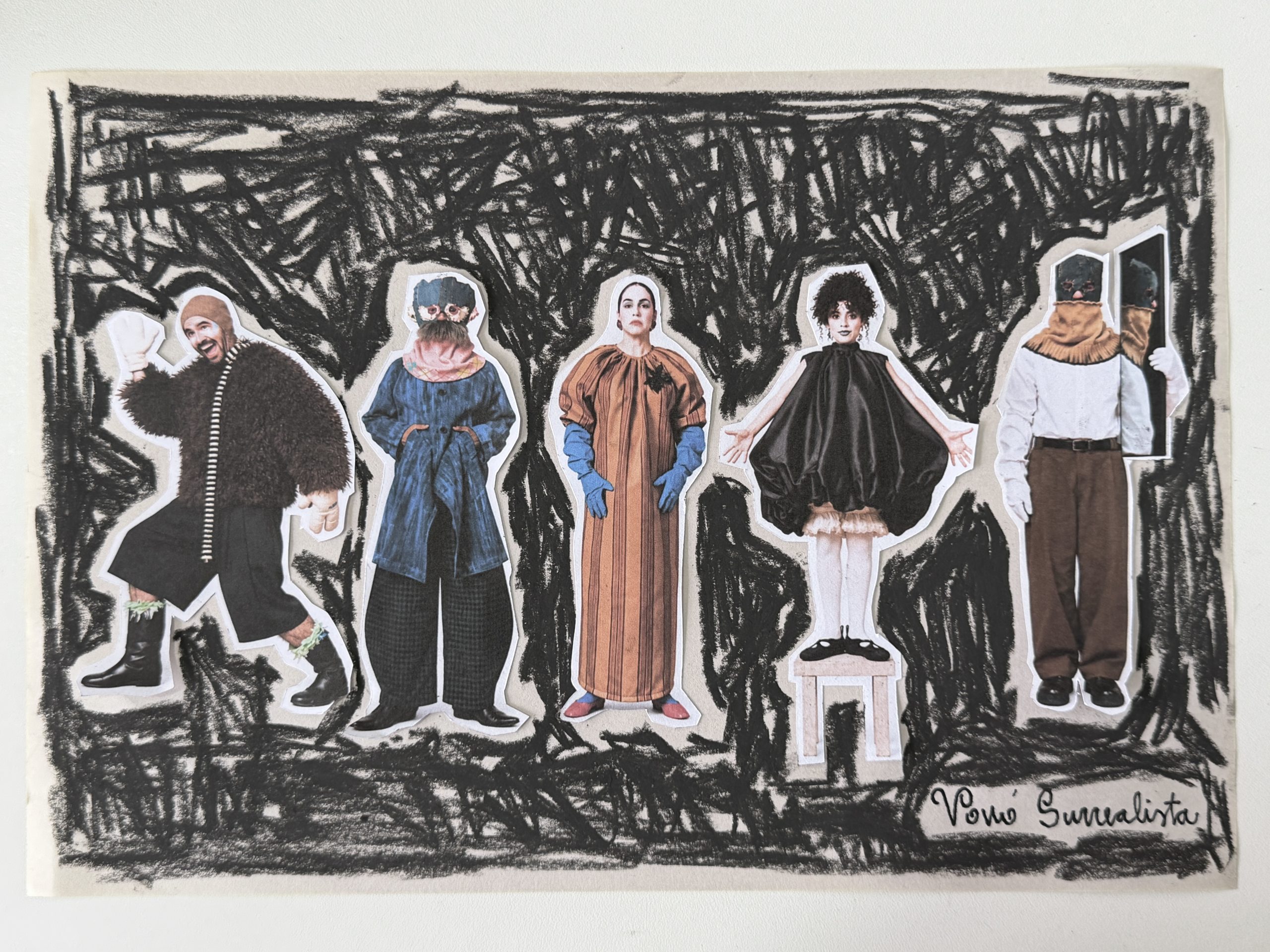
For Vovó Surrealista, a new São Paulo children’s play written and directed by Carlos Canhameiro for the company Cia. de Feitos, the designers, both from a background in fashion, sought to dress the performers without starting from that premise. Instead, they wanted to connect the clothes with the humour of the story which is about a grandmother who never learnt to read and so invents stories from the books she carries under her arm for her grandchildren. “Through this game,” they say, “meanings are displaced in a kind of semantic surrealism.”
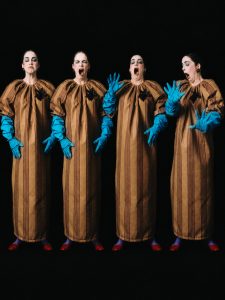
And surreal it is. Rarely, if ever, does the imagery around a contemporary theatre show get a response out of me like this. Of course, the costumes are remarkable, especially surprising given that they are to be performed for audiences of children: a masked figure is crowned with a wave of ostrich-orange feathers; a black dress balloons around white bloomers; and a fireman’s helmet is topped with a brass lion. They wear their references lightly: a nod to Comme des Garçons in their shapes, a Margiela trick here and there. But it is the overarching vision, together with the photography by artist Marina Faria, that treats a kids’ play with the seriousness of an editorial shoot. Anuro and Francisco invited Faria to interpret their work as they were drawn to her “tactile and experimental approach,” which connects with the universe they created for the piece, where meanings are not always obvious or fixed.
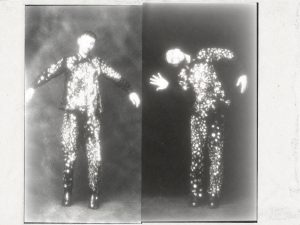
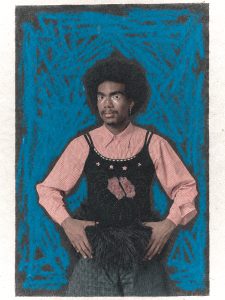
Disembodied gloves float in from the edges of the frame, a mustard ticking-stripe tunic hangs cut-out and empty, a suit dissolves into a field of stars: it has the feel of Surrealist photomontages, of Man Ray and Claude Cahun, hand-tinted and reassembled. They conjure images of early spirit photography, and there’s a Joel-Peter Witkin darkness to the still tableaux, the figure kneeling under an organza shroud. Beautiful and faintly morbid at once.
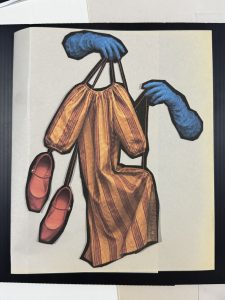
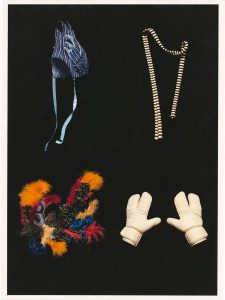
Anuro tells me he is most interested in what happens when he brings his fashion background into the theatre, in “taking an image out of its original place, contaminating it with other references, and allowing it to reappear charged with a different meaning.” Which I readily agree with. I find myself wondering why more costume and set designers don’t present their creations in this way. I suppose it’s because they are already overworked and underpaid, but the institutions could stand to pay attention.
I am simply overjoyed to be amazed. Amazed enough to resent geographical constraints for keeping me from this play, and to envy, quite seriously, the children who get to see it in the flesh. Oh to get a quote from the kids who have born witness to this. For now, I’ll happily imagine their squeals.