
 My Melodrama



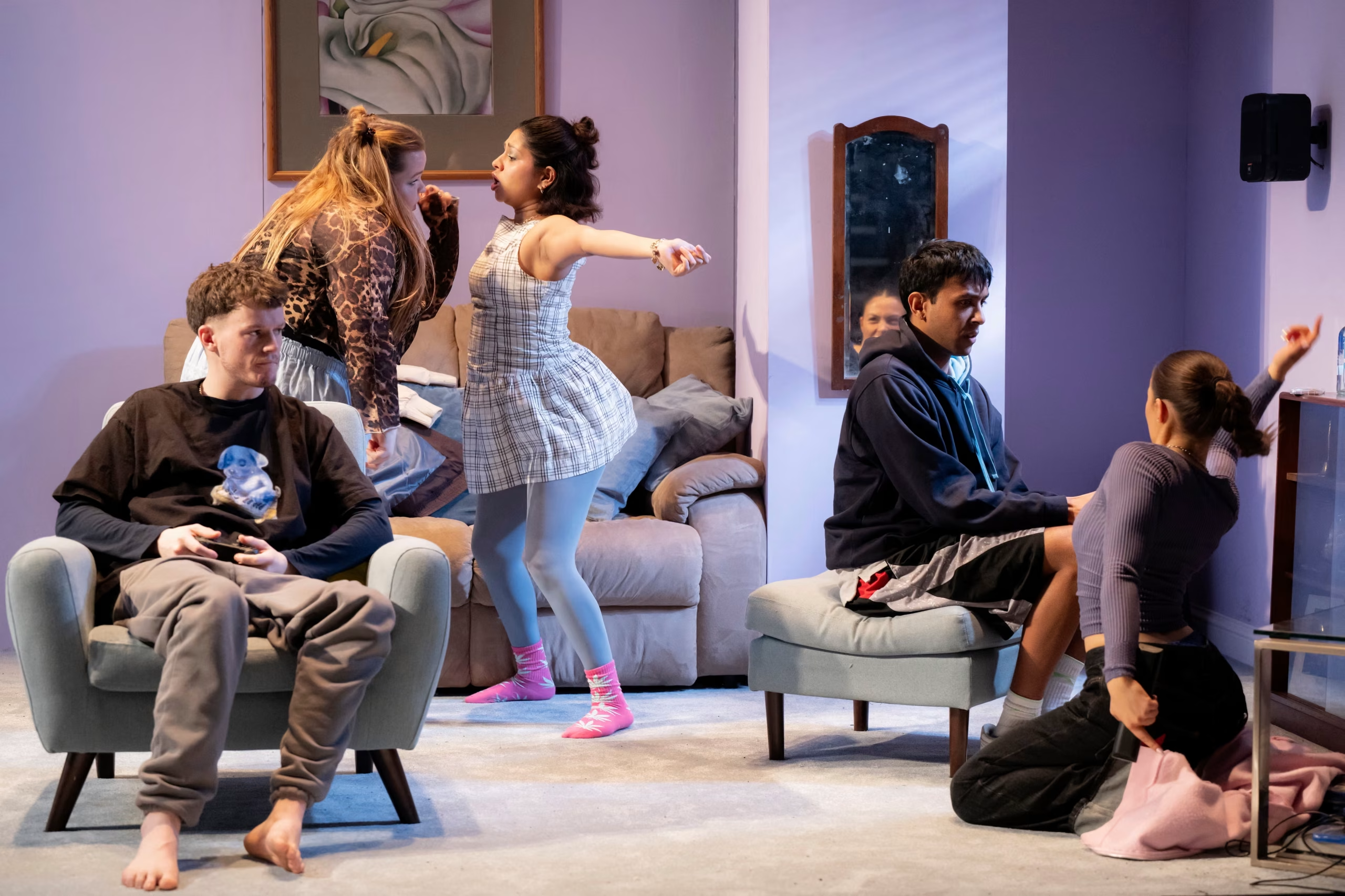
“My phone vibrated with a text of the SMS variety. A rarity in our now WhatsApp dominated world. Your tickets for The Virgins today, it said. My excitement levels rose. This is the closest I’ve ever come to receiving a sext. ‘The Virgins’ is the second play I’ve seen by Miriam Battye at Soho Theatre; the first was called \'Strategic Love Play\' which I enjoyed and would recommend reading. Love and sex are evidently favoured lines of enquiry for Battye, and all teenagers everywhere… The teenagers in this show, three girls and two boys, are hanging out at home. The girls are preparing to go ‘out out’ and the boys are gaming. Enter stage left Anya, ‘the hottest, coolest, loudest girl in school’. Her social currency is sky high: she’s in the year above and sans V-plates. She is (seemingly) self-assured and (definitely) a bully. Watching her operate is terrifying. Everyone knew a girl like this growing up. Anya leads the other girls’ sexual education with the kindness of a fascist dictator. I felt like an old matron watching on, desperate to tell the teenagers that no one knows what their doing and that things like practicing-fellatio-on-your-toothbrush will become excellent party anecdotes for them in a decade’s time. I loved the set and the show’s premise and was very happy to see both female and male awkwardness in tandem. But despite being only 85 minutes this show felt too long and could have done with some fast-forwarding. A bit like losing one’s virginity.”
 Catch while you still can
Julieth Lozano Rolong Salon Concert
We spoke with the fabulous Colombian soprano Julieth Lozano Rolong ahead of her recital with pianist Anna Tilbrook, which they will perform at Bechstein Hall—a new London venue making space for classical music to feel closer and less ceremonial—as part of Opera Rara’s Salon Series.
With a particular focus on music by women composers, the recital (as Julieth told us) places Schubert alongside Latin American song—guided less by genre than by what moves her. We think this is a cool chance to hear one of the most remarkable emerging voices while testing out different corners of classical music in a refreshingly low-pressure way.


From: February 26th, 2026
Until: February 26th, 2026
- Concert
RECOMMENDED BY
Not yet recommended
What our culture curators are saying
Not yet reviewed
RECENTLY REVIEWED
‘Sweet Mambo’ – A piece by Pina Bausch
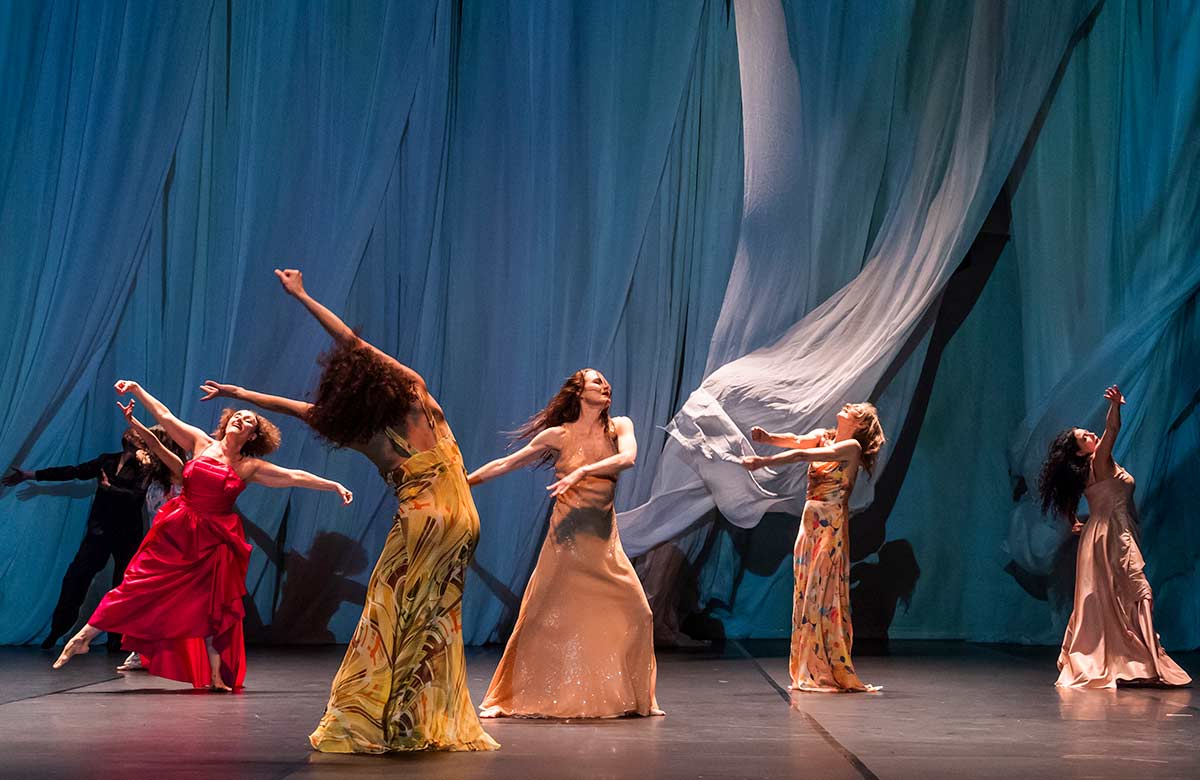
“A woman slips away from the party for a moment of blissful solitude. Her champagne-coloured gown wafts gently in the breeze. Behind, long white drapes billow, blown by a large fan offstage - I am reminded of the dream scene in Singing in The Rain, one of my earliest impressions of the beauty that the body’s movement can evoke. The dancer is in her own world, enjoying the shapes her body makes to a melodic electric guitar. This was one of many moments that sparked pure joy during the two and a half hour performance of Pina Bausch’s Sweet Mambo at Sadlers Wells. Throughout, the audience is treated to all the many characters one meets at a party, and learns of their loves, laughter, and woes. Whilst the three male dancers play their part in the performance, it is the women who take centre stage and remind the audience of all the spectrum of emotions, personalities, and experiences that we hold within one being. There’s sex, there’s conflict, and a whole load of comedy to boot. This is performance theatre at its finest. The dancers intersect fluid group sequences with witty monologues about what it means to be with someone else, and to also be alone. Bausch is an innovator combining movement, music and spoken word to evoke joy and anguish in equal measure. She challenges modern-day perceptions of beauty and strength, bringing together a cast of older, experienced dancers who prove that age does not limit the impact you can have on stage (in a dance performance world where we often see youth centred above all). I adored Sweet Mambo. I laughed, I cried, and left the theatre with a warm glow and sense of possibility. If you have the chance to, go. You quite simply must!”
Man and Boy
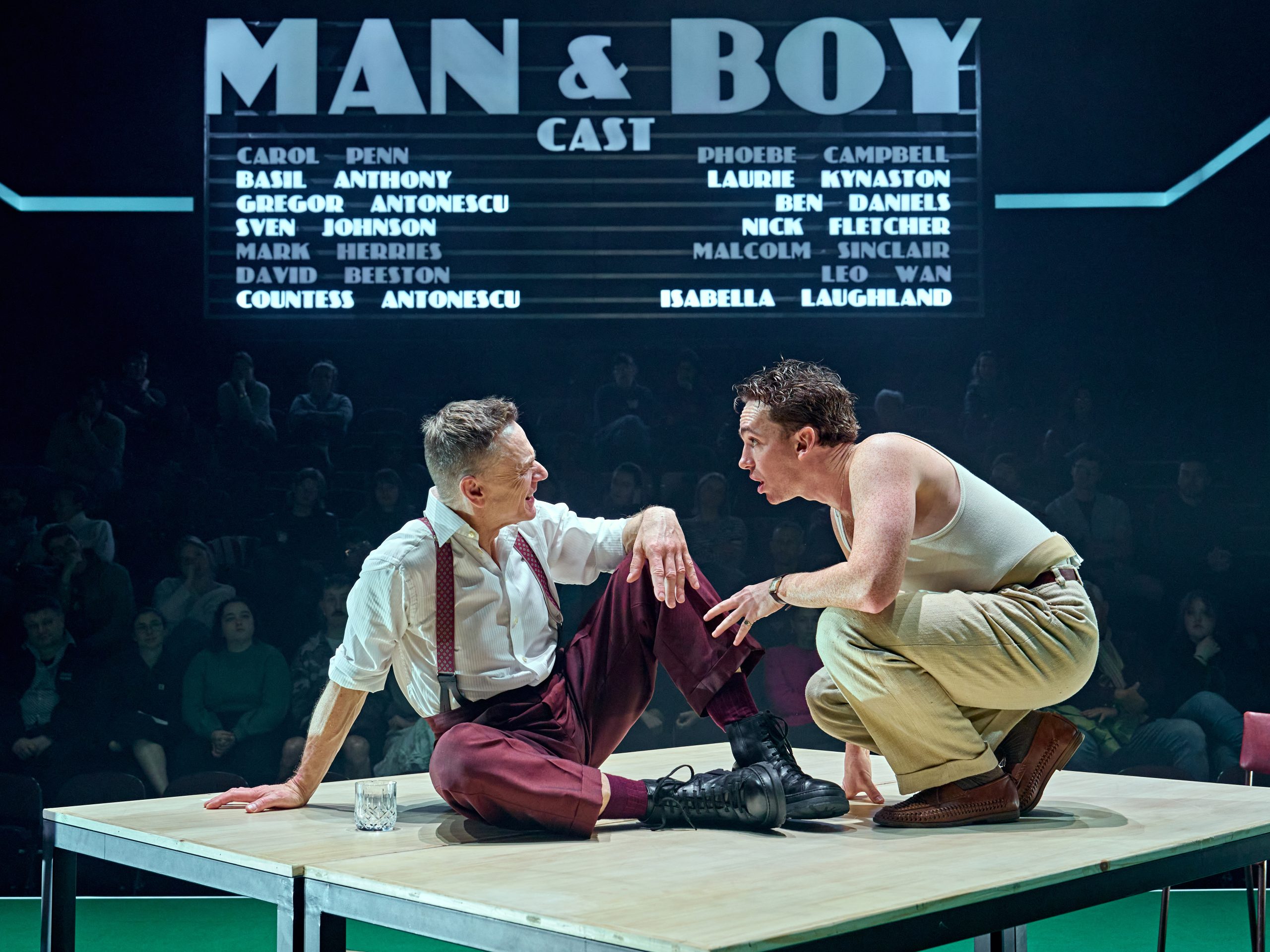
“To provide a synopsis of this late play by Terence Rattigan, first performed in 1963, is to describe a scenario so utterly repugnant that, were it not for the pervasiveness of grotesque revelations in the Epstein Files, seems beyond belief. The drama unfolds in a basement apartment in Greenwich Village centred around a global financier, Gregor Antonesu, teetering on the precipice of financial ruin, and his estranged son, Basil Anthony (formerly Vasily Antonescu, an idealistic piano player attempting to forge a new life. As rumours of a failed merger are broadcast over the wireless and the walls begin to close in on Antonescu, he formulates a plot, seemingly on the fly, to push through the merger by using his son as a sexual bartering chip. Ben Daniels portrays Antonescu and does so with aplomb, as the man sat next to me observed during the interval – “it’s a humdinger of a role and he [Daniels] has grasped hold of it with both hands”. An astute observation as Daniels does exactly that, dominating the stage with a whirling, serpentine performance as he postulates, seduces, and charms his way through both acts – a cornered animal will do anything to survive. Such is the energy and charisma of his performance that the cast can seem static by comparison, like objects that exist in his orbit and are pushed around the stage by his will. This is, perhaps, the point – a mercurial menace cutting across the stage, bending the universe to his will. Indeed, the only character to provide any resistance to Antonescu’s magnetism is the accountant who has tugged the thread that will unravel his fraudulent financial empire, David Beeston, portrayed by Leo Wan. However, it is here that tragedy makes way for farce, Beeston’s spluttering attempts to checkmate Antonescu are derided and the sting of his resistance is undermined by the staging, which seems him clamber over furniture in a most perplexing way and to unravel a ream of accounting papers from his briefcase which he then proceeds to wrap around the set in an almost slapstick manner. While the stylised performance of Daniels can stand alone as the exuberance of ego, of “confidence and liquidity” as he so often proclaims, in conjunction with the slapstick elements of the rest of the performance, and the distraction of the constantly shifting tables on stage, the chilling nature of the material gets lost amidst the laughs. The production liberates Rattigan from the page, and though it succeeds in some places, it tries too hard in others, ultimately detracting from the revulsion of the story.”
Leave A ResponseWe’d love to hear your thoughts on this show!
You must be logged in to post a comment.