
 My Melodrama

 Catch while you still can
Have Yourself a Merry Little Holiday
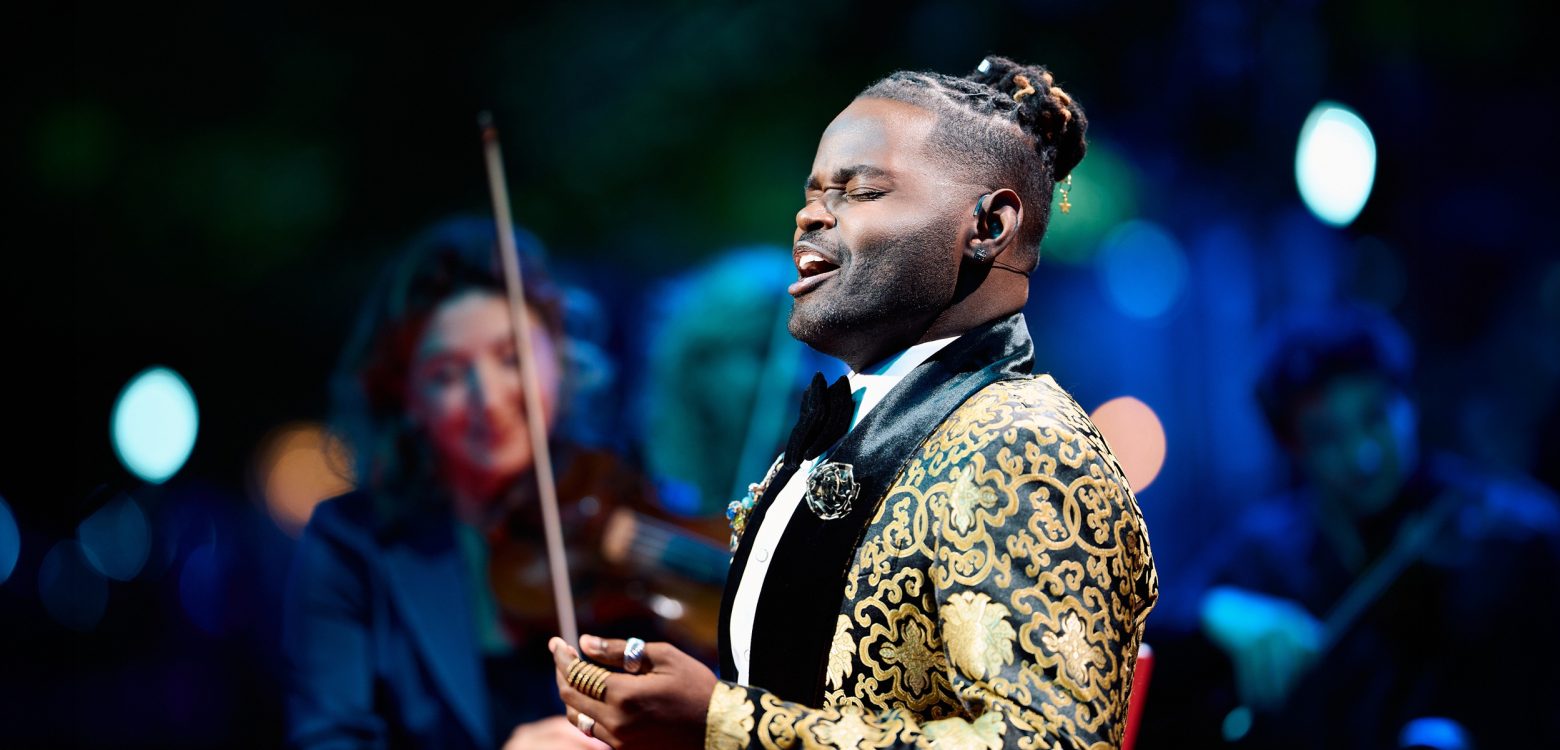
Around two minutes into my call with John Holiday, I think to myself: surely this is one of the hardest-working artists in showbiz. It is not a word opera tends to use about itself, perhaps considering itself too rarefied for it, but in Holiday’s case it fits. Yes he is one of the most in-demand countertenors (a male classical singer whose voice, sweet and surprising, sits in the female mezzo-soprano range) in opera, but he has also had a turn on The Voice in 2020 (where he reached the final on Team Legend), and we are speaking today because of a Christmas tour of the Netherlands that is spiritual, jazzy and appropriately merry all at once. We would certainly not be the first to call him a one of a kind performer.
 london


Alongside this, Holiday is preparing a recital at the hallowed hall of Wigmore in London, and the new year will take him to Die Fledermaus at the Bayerische Staatsoper in Munich (Strauss’s champagne operetta, in which he plays the hedonistic aristocrat presiding over the ball) and Akhnaten at Komische Oper in Berlin (Philip Glass’s portrait of the heretic pharaoh, one of the roles that has come to define his career), and then on to Houston Grand Opera. As we speak, the score for Red Fox, a new opera by the Chinese-American composer Du Yun, sits under a hole puncher on his desk: a role he is learning from scratch for its world premiere at the Amsterdam’s Nationale Opera & Ballet. “I was literally looking at it just now,” he tells me. It is one of three Barrie Kosky productions this coming year, and his fifth with the Australian director in all. He speaks of Kosky with real devotion: “If Barrie asks me to do anything, it means he believes that I can do it.” When it comes to practice, he puts in three or four hours a day, sometimes five or six, though he confesses that much is rare, and not necessarily healthy. Mostly he learns slowly, bit by bit, splitting the time across the day, some of it singing and some of it sitting with the text and translating. “There’s a lot,” he says, “but there’s a way to compartmentalise it. So, yeah, it’s getting done.”
It might sound like I am describing the average route of a working opera singer, forever juggling several pieces at once. But how many opera singers are, at the same time, touring a work they dreamed up themselves? Holiday’s is a song cycle called The Afterparty, drawn from the writing and the spirit of the Harlem Renaissance: “So many of us, African American people in the United States, we’re often shown these images of being downtrodden, of things happening to us,” he says. He wanted to hold up the opposite: a time when Black Americans insisted on being seen, as he puts it, “not just as the help, not as second-class citizens, but as the royalty that they knew that they were.” He made it partly for his nieces, nephews and godchildren, so that they grow up feeling the joy and the pride of being a Black person in America.
For the music he asked Carlos Simon, a Grammy-nominated composer (and the Concertgebouw’s composer-in-residence this season), whom he had never met but had once watched, in a video, playing a Hammond B3, the warm organ of the African American church tradition. “I thought, this is the guy that should write the music.” Both men were raised in the church, Simon the son of a Church of God in Christ pastor, Holiday a Missionary Baptist in Texas, and over dinner in Washington he shared his vision with Simon: “I want this to feel like church.” In December their piece reaches the Concertgebouw, where the Amsterdam Sinfonietta will perform it among spirituals and carols for the season. Of everything on his calendar, it is the piece closest to him, the one, he says, that is “so very near and dear to my heart.”

Holiday gleefully calls himself “a stage animal,” though not, he is quick to add, just for the stage itself. “It is the people in the room that give me energy. I am such an empath by nature that I feed off the energy in the room.” A street corner would do, or a classroom, as long as someone is listening, and he means it sincerely. Told young that his rise would be slow and steady, he has come to prefer it so. “I love the slow meteoric rise,” he says, wary of anything that comes so fast it leaves the same way. The line he gives his students he gives himself too. “Comparison is the thief of all joy,” he says. “Create the thing that you think you want to do that nobody sees. And then somebody will see it. I’m a living witness.”