
 My Melodrama

 Catch while you still can
Julia Bullock brings her decade-long reckoning with Josephine Baker to the Barbican
“Can we have five minutes of quiet?” Julia Bullock is asking, gently, not of me but her son, who has padded into the room in Houston where the American soprano is in the middle of a ten-day residency. Her husband, the conductor Christian Reif, is down the hall making eggs; the whole family has come along, moving city to city together. I ask how it is to sing and travel the world with a small child in tow. “I’m not feeling as much of a call to wander,” she admits.
 london


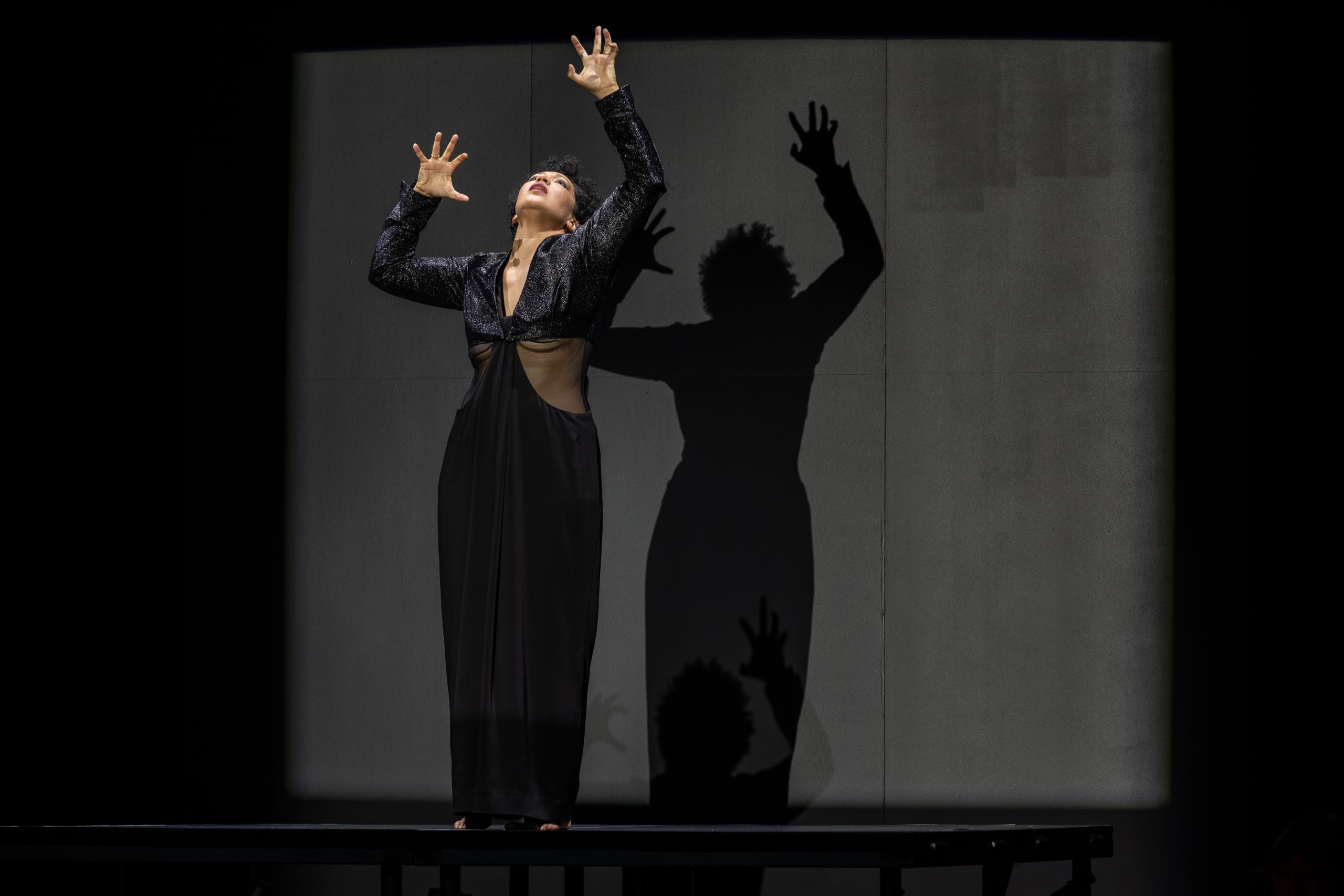
Bullock has just opened the season at the Paris Opera with Perle Noire: Meditations for Joséphine, her decade-long reckoning with Josephine Baker, made with the director Peter Sellars, the poet Claudia Rankine and composer Tyshawn Sorey. Baker was the American who became the superstar idol of Jazz Age Paris, and famously smuggled secrets for the French Resistance in invisible ink on her sheet music during The Second World War. After eight shows in fourteen days for elated audiences (Baker might as well be Paris’s patron saint — she is buried in the Panthéon), “I felt like a Broadway performer,” Bullock says. It reaches the Barbican this month, its UK premiere, after runs in Australia, Amsterdam and Paris.
Bullock is a classical singer of spellbinding theatricality, with a 2024 Grammy for her debut album Walking in the Dark, residencies everywhere from the Metropolitan Museum to the San Francisco Symphony, and a hand in teaching and producing other people’s work. “I do define myself as a singer,” she says, “but what that encompasses is very full.” She keeps herself, as she says, in “a state of learning and reassessment,” curious about art practices well outside her own. Certain preoccupations, she says, have “consumed my consciousness over the past years,” and she seeks out the repertoire that lets her share them.
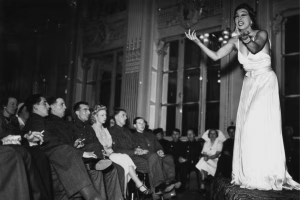
Perle Noire she calls a music-theatre work on an operatic scale, though in practice it runs closer to cabaret: one song, then the next, no clear plot. The music and her performance are eternally shifting and evolving, so no two performances are quite the same: “We are all building the piece each night,” she says. Rankine wrote a passage about Baker singing I’ll Be Seeing You to wounded soldiers in a wartime hospital, and Bullock kept pressing Sellars and the group to work it in. So far they have not agreed on where it belongs, which is what she means by workshopping.
Which leaves the harder question, the one she keeps circling: how to do justice to Baker’s “existence and the depth of her complete humanity.” The most meaningful response came from Baker’s own son, who saw the show in Amsterdam and told Bullock it had honoured every aspect of his mother.
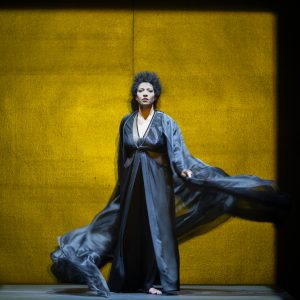
Baker’s life was so extraordinary that it is almost hard to believe one person did all of it. She was a magnificent singer, dancer and a spy, yes, but also a mother to twelve adopted children she named her Rainbow Tribe, the chatelaine of a castle in the Dordogne, a muse to Cubist artists Calder and Le Corbusier, and, in 1963, a speaker at the March on Washington. To leave any of it out, Bullock says, “feels like almost a betrayal of her.” Bullock grew up in St. Louis, where Baker was born, and the racial injustices Baker faced are, she says, “still entrenched in much of our culture.” She has had to “contend with, recover from, resolve and release” them in her own body, “as a woman, as a brown person, as a black person.”
For a decade Bullock has been taking apart the simplified version of Baker and now she will do it once more in London: one St. Louis woman’s experimental tribute to another.