
 My Melodrama

 Catch while you still can
ARTHUR MILLER’S PLEA FOR US TO PAY ATTENTION
When Arthur Miller plays are revived, they don’t reflect contemporary time or mores in the way that other writers might. Broken Glass takes place at the dawn of World War II, All My Sons takes place in the wake of it; The Crucible takes place during the Salem Witch Trials. And yet, it’s through this adherence to time and context that Miller’s work is able to feel so resonant and powerful decades after the plays were first performed. Now, in 2026, a wave of revivals are gripping The West End and Broadway; whether it’s the recent, starry production of All My Sons; a new iteration of Broken Glass, and, over on Broadway, Death of a Salesman. And more than that, Miller’s work is being considered with a new, explicitly contemporary eye; the post-Crucible drama, John Proctor is the Villain, took New York by storm in 2025 and is on in London at the Royal Court throughout the spring.
Miller was a prolific writer and public figure during his life; as well as winning the Pulitzer Prize for Death of a Salesman, he was in a very public marriage with Marilyn Monroe, and at the centre of the HUAC hearings, designed to root out supposed communist influence in American cultural institutions. It was these hearings – and the betrayal of former close friend, the director Elia Kazan – that sent Miller to Salem in order to research The Crucible. Miller, as a thinker and writer, understood that the past, present, and future, are all more similar than we might like to think; something John Proctor is the Villain also seems to be engaging with.

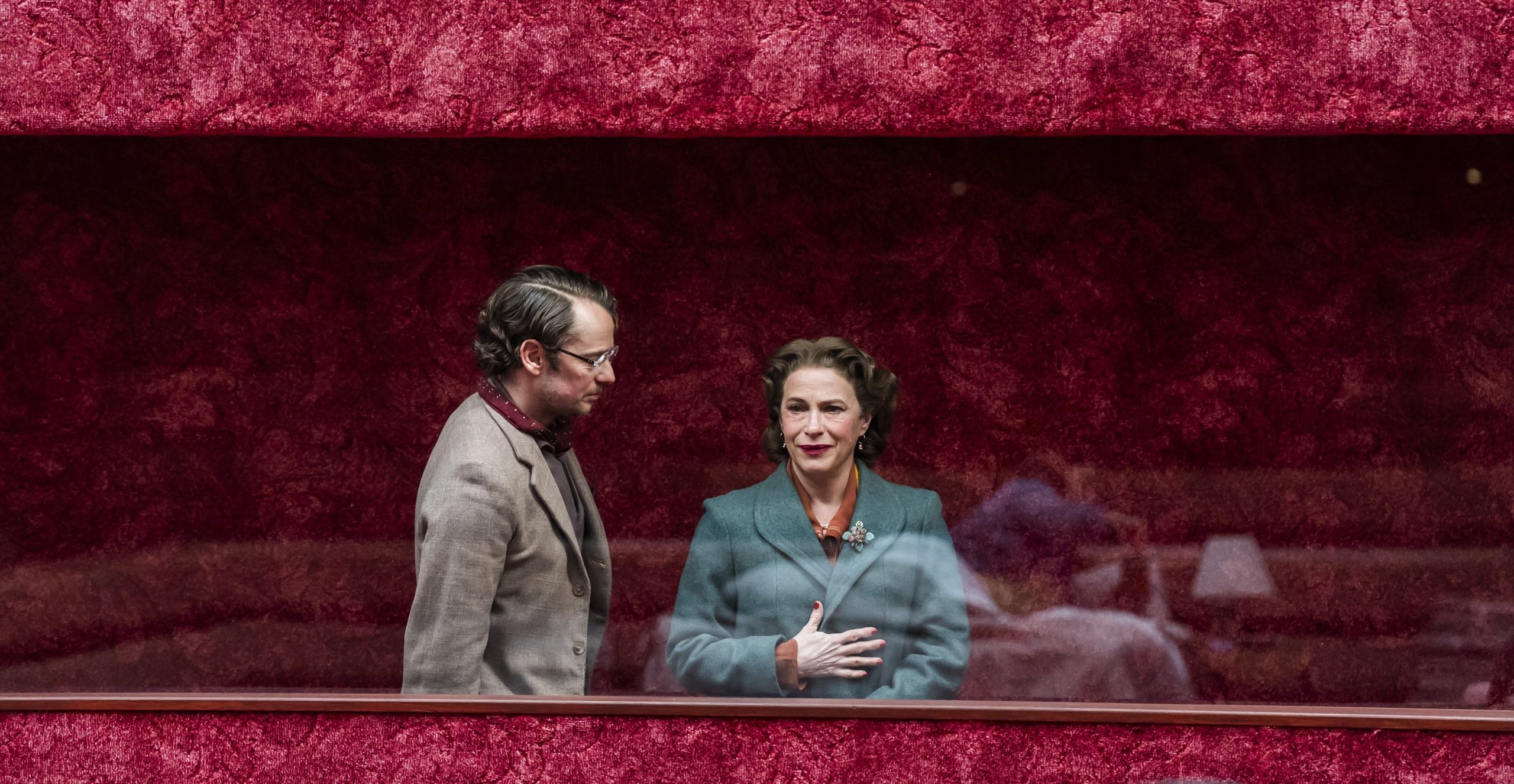
At the core of Miller’s plays, their human drama and political edge, is a desperate plea for audiences to pay attention to the world around them. That famous line from Death of a Salesman, “attention must be paid,” is emblazoned on the marquee of New York’s Winter Garden Theatre, where the play is revived until August 2026. In Miller’s theatre, paying attention means opening oneself up to the danger and anxieties of the wider world. This is at the core of Broken Glass, recently revived at the Young Vic Theatre in London; Sylvia Gellburg’s obsessive reading of news stories about the rise of fascism at the tail end of 1938 seems to be the cause of her sudden paralysis; and in one of its most shocking moments, where – possessed by anger and frustration – she demands to know “what will become of us?” she stands on her own two feet for the first time in the play. Miller’s anger, and the things that he seems to want his audiences to pay attention to, are the powers and uncaring nature of vast institutions and ideals. For Sylvia, it’s the rise of fascism; for Chris Keller in the recently revived All My Sons, it’s the endless impulse to bleed as much money as possible from anything, embodied by his father Joe – even if it comes at the cost of human life.

And human life is always the cost that must be paid, in the end. So many of Miller’s plays end with the reality or possibility of a character dying, as if the weight of the world – of their guilt, their self-loathing – becomes too much to bear. For better and for worse, Miller’s plays show no interest in presenting what a new world might look like (Broken Glass in particular ends on a precipice). Instead, they remain laser-focused on the fact that the current world isn’t enough for us; at the end of the recent production of All My Sons, the dead Joe looks down at his family, the unknown ahead of them.
Share a commentWe’d love to hear your thoughts
You must be logged in to post a comment.