
 My Melodrama

 Catch while you still can
SETTING THE SCENE WITH DESIGNER GARY MCCANN
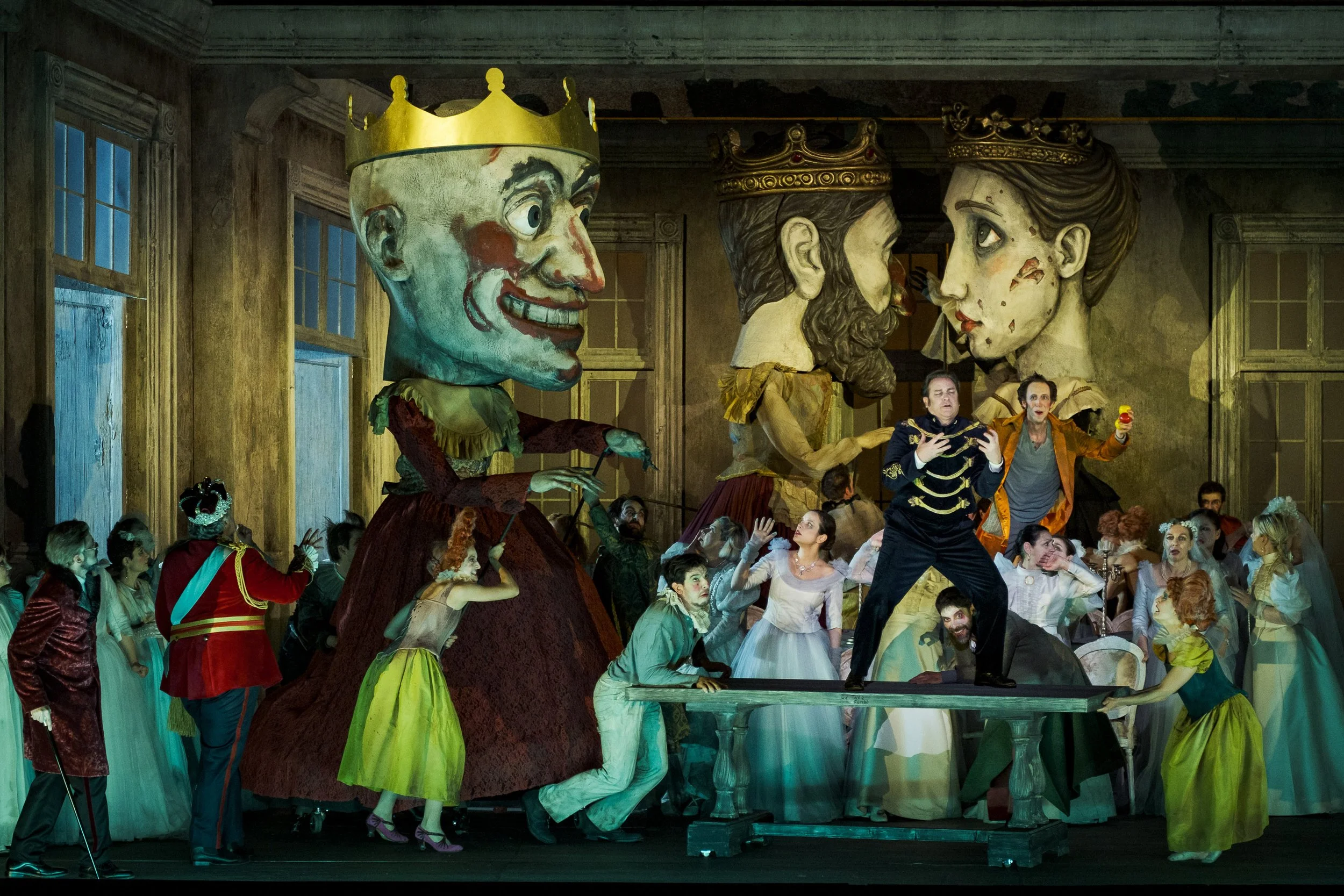
From a childhood spent building worlds out of Lego in rural Ireland to designing for the historic stages of La Fenice and La Scala, set and costume designer Gary McCann has made a mark on the world of international opera and theatre. His monumental sets marry historical art forms with the immediate—to grand and magnificently joyful effect.
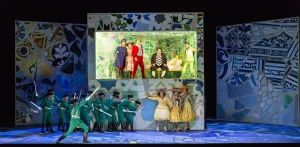
Whether it’s the gilded, outsized acanthus plasterwork of his celebrated Der Rosenkavalier at Garsington or the exuberant, Gaudí-style decors for Il barbiere di Siviglia with the Nederlandse Reisopera, McCann reframes these works through a sharp, architectural and contemporary lens.
In this interview, it becomes clear that McCann’s place in the theatre was inevitable (he was requesting Wagner tapes at age eight!). We discuss how he curates his references—such as the Hammershøi interiors that informed his Hamlet in Turin—and his conviction that opera doesn’t “need simplifying; it needs clarity.”
 london

Louise Snouck Hurgronje: Were you a visual world-builder as a child or teen? Is that how you came to your career as a stage & costume designer?
Gary McCann: I grew up in Portadown in Northern Ireland in a working-class household, so theatre wasnʼt part of everyday life. What I did constantly was make things. I built worlds out of Lego, played with Fuzzy Felt, drew endlessly. I was interested in how environments worked long before I knew design existed as a profession. Music arrived early. I asked my parents for Wagner tapes when I was about eight. I didnʼt understand the stories, but I recognised the scale and atmosphere. When I eventually found theatre, it felt familiar rather than new. It was the place where space, music and storytelling came together.
LSH: When I think of the productions you have waved your magic wand over, what stands out to me is your playing with different periods. Your creations marry a historical art form with the here and now in a very unique and joyful way. Is this something you are focused on?
GM: Opera already exists slightly outside ordinary time. Treating it as strict historical reconstruction often feels artificial, but removing history entirely removes its weight. The work usually sits between those positions. The starting point is always the emotional logic of the piece. Once that is clear, decisions about period and style follow naturally. Historical forms carry meaning and structure, but the atmosphere has to feel immediate. When that balance works, the audience accepts the world without needing explanation.
LSH: As an internationally in-demand designer, you must be living across many different countries and cities in any given year. How do the cultures of these different places have an impact on your ideas and imagination? Is there a city or theatre that has been particularly inspiring?
GM: Each theatre shapes the process differently. Workshops carry their own traditions, and that affects what you design because you understand how things will be made. La Fenice in Venice has always felt special. The theatre has an extraordinary history, but itʼs also the practical reality of working there — scenery arriving by barge through the canals before reaching the stage! Itʼs a reminder that theatre remains a physical craft connected to the city around it. Venice itself changes how you think about light and surface; everything feels slightly worn and reflective. More generally, places influence atmosphere rather than imagery. You absorb the rhythm of a place and it finds its way into the work later.
LSH: How many different types of artisans are you working with on one production? The sumptuous baroque plaster work in Bruno Ravellaʼs production of Der Rosenkavalier for example! I imagine this was the result of collaboration between you and a sculptor?
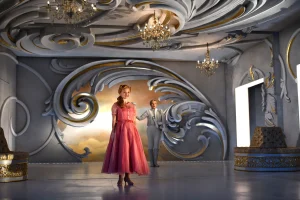
GM: A large opera production can involve dozens of people — sculptors, scenic artists, metalworkers, painters, costume makers, prop builders. A drawing or model is only the beginning; the quality comes from the people who realise it. The outsize acanthus plasterwork on Rosenkavalier was the result of a very special sculptor who I know could handle it – Stephen Medcalf – I specifically requested his involvement. Often a craftsperson will solve a problem in a way that improves the design. Opera still depends on skill and experience in a very direct way, and that collaboration is central to the work.
LSH: I am fascinated by your 3D models. Can you tell me a little about this process? Do you make one for every production?
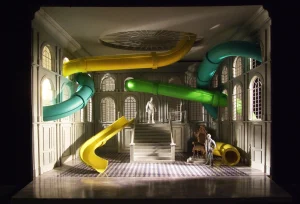
GM: Almost always. The model allows decisions to be made early — sightlines, scale, movement, how light behaves in the space. Problems are solved before anything is built. I still think of it as an extension of making physical models. The technology isnʼt the focus; itʼs simply a clearer way of understanding and communicating space.
LSH: What does a day in your creative process look like in the first week of working on a project, versus the week before premiere?
GM: The first weeks are slow. Reading, drawing, gathering references, trying to understand what the piece requires before fixing an idea too quickly. Thereʼs a lot of uncertainty at that stage. By the final week everything becomes practical. Adjustments are small but significant — proportions, textures, movement. The work stops being theoretical and becomes physical.
LSH: How do you gather your visual references at the start of a production? I saw somewhere for example that the artist Vilhelm Hammershoi was an inspiration for your Hamlet at Teatro Regio di Torino?
GM: References accumulate over time rather than being searched for at the start of a project. Paintings, buildings, photographs — things stay in the background until they become useful. For Hamlet in Turin, Hammershøiʼs interiors helped define the stillness of the space. It wasnʼt about imitation, but atmosphere.
LSH: Which collaborations are most memorable for you?
GM: The most productive collaborations are those where design is treated as part of storytelling rather than decoration. Early in my career I assisted Maria Björnson, Bill Dudley and Paul Brown, and seeing how differently they approached scale and narrative was formative. It made clear that each production demands its own language rather than a fixed style.
LSH: It was the legendary director John Cox who gave you your big break with Fidelio at Garsington Opera right? What had your experience with opera been up to that point?
GM: Yes. That was an important moment. I had worked in theatre, but opera operates on a different emotional and visual scale. John had an extraordinary calmness in rehearsal. Even when things became complicated, his focus remained on clarity of storytelling, and that discipline stayed with me. I ended up buying his apartment in Brighton, which is now my home – complete with a fireplace gifted to Cox by David Hockney!
LSH: How epic is that! Do you ever talk to audiences about their experiences after one of your shows? Is this something that is at all important to you?
GM: Occasionally. Audiences often notice things you werenʼt consciously aware of. Once a production opens, it belongs to them as much as to the people who made it.
LSH: And what do you say to those that might be ‘afraid’ of opera? Is there a way for the art form to evolve to be more inclusive?
GM: Opera can appear formal from the outside, but the emotions are direct. When the visual world supports the music honestly, audiences understand it instinctively. It doesnʼt need simplifying; it needs clarity.
LSH: Something I have wondered about; do you collect keep-sakes from all the productions you work on and cities you travel to?
GM: Not deliberately. Iʼm more interested in how spaces feel than in collecting objects. My home has been written about in that context, and the connection is genuine… designing interiors and designing stages come from the same instinct. Both are about how people experience space over time.
LSH: And finally, you will be working at La Scala in the New Year. Does this venue feel particularly special?
GM: Yes, because of the history. You’re aware of the artists who have worked there before you, but the audience expects something immediate and alive. That tension keeps the work focused.
ONE MINUTE WITH MELODRAMA
OPERA, MUSICAL OR PLAY?
GM: Opera. The scale of emotion is unmatched.
FAVOURITE PERFORMING ARTS VENUE?
GM: Teatro di San Carlo in Naples. The history and the direct relationship between audience and stage make it feel completely alive.
FAVOURITE PRE/POST SHOW HAUNT?
GM: The lawns at Glyndebourne. The interval becomes part of the ritual of the evening.
THE MOST LASTNG ADVICE YOU’VE BEEN GIVEN?
GM: Trust simplicity.
THE OPERA THAT SHOULD BE REQUIRED VIEWING?
GM: Peter Grimes.
A DESIGNER WHO INSPIRED YOU?
GM: I was fortunate early in my career to assist Maria Björnson, Bill Dudley and Paul Brown, and learned very different things from each of them.
AN ARTIST YOU WOULD LIKE TO COLLABORATE WITH?
GM: An architect or painter — someone who approaches space differently from theatre.
Share a commentWe’d love to hear your thoughts