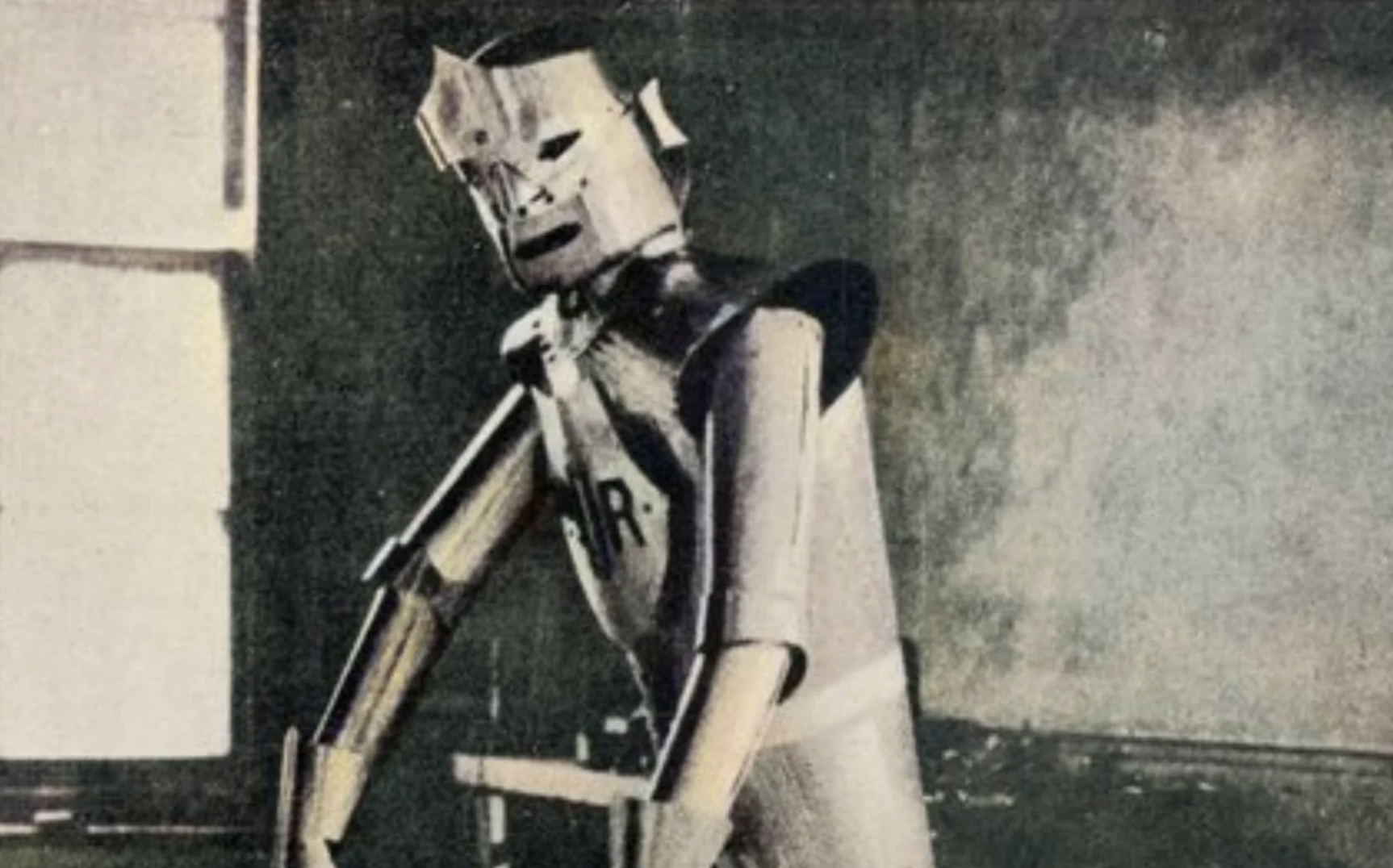
The spectre of AI is inescapable. Whether we want it there or not, AI prompts are left in the first drafts of manuscripts, digital content creators increasingly rely on it in such a way that it dilutes their own voices, chatbots conjure fake facts. These are the first steps taken in Rossum’s Universal Robots, the 1920 play by Czech playwright Karel Čapek that is a foundational text of modern science fiction. It gave us the very word “robot”, from robota, Czech for forced labour.
Archives: Stories
-
Converting A Reluctant Theatre-Going Boyfriend
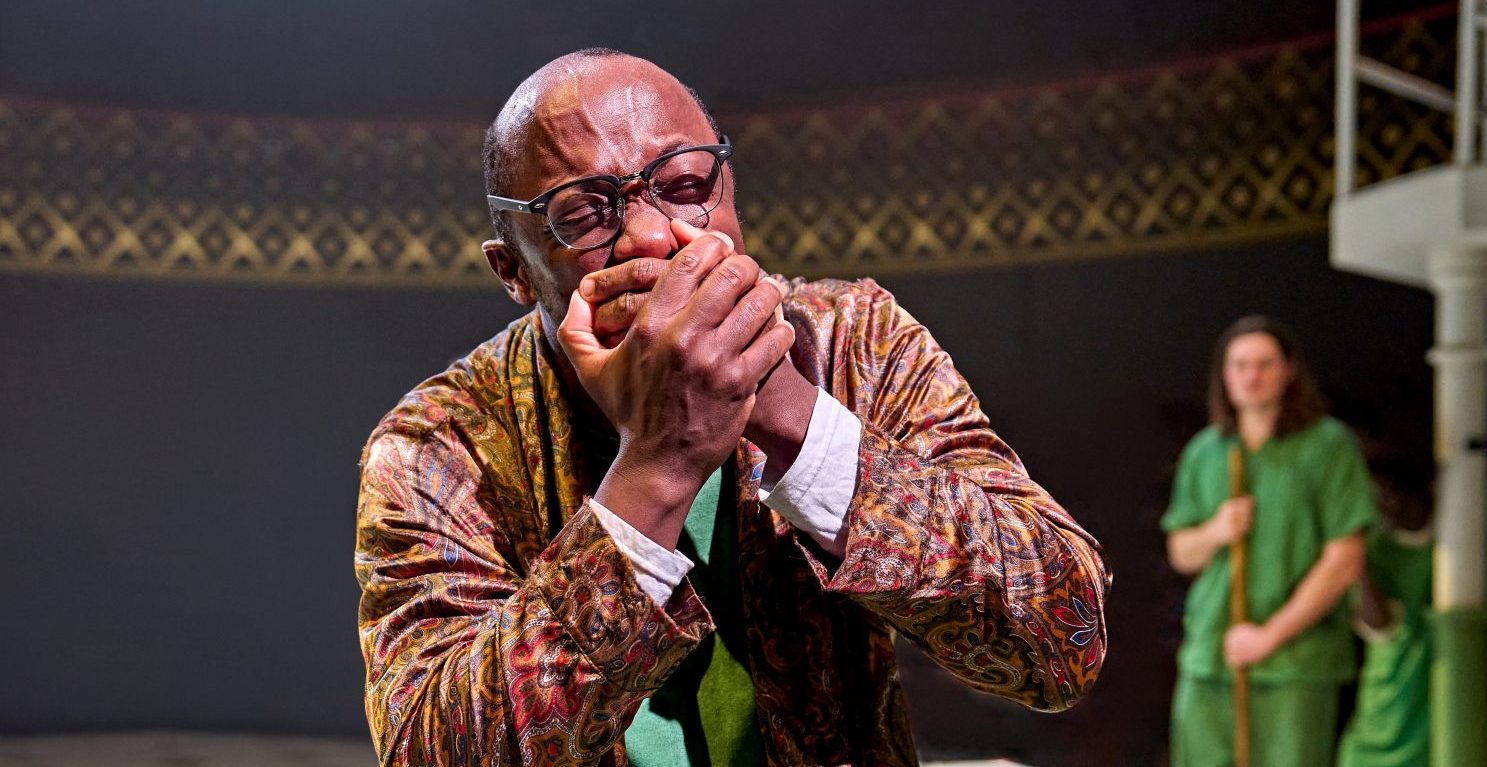
I am aware that there may be others in the position I find myself in: dating someone absolutely wonderful in all ways but one — that for some reason they can’t entirely explain themselves, they do not feel excited about going to the theatre. And therefore you have never been together.
-
Dancing with Calder: Christine Dakin on Bringing Martha Graham to the South of France
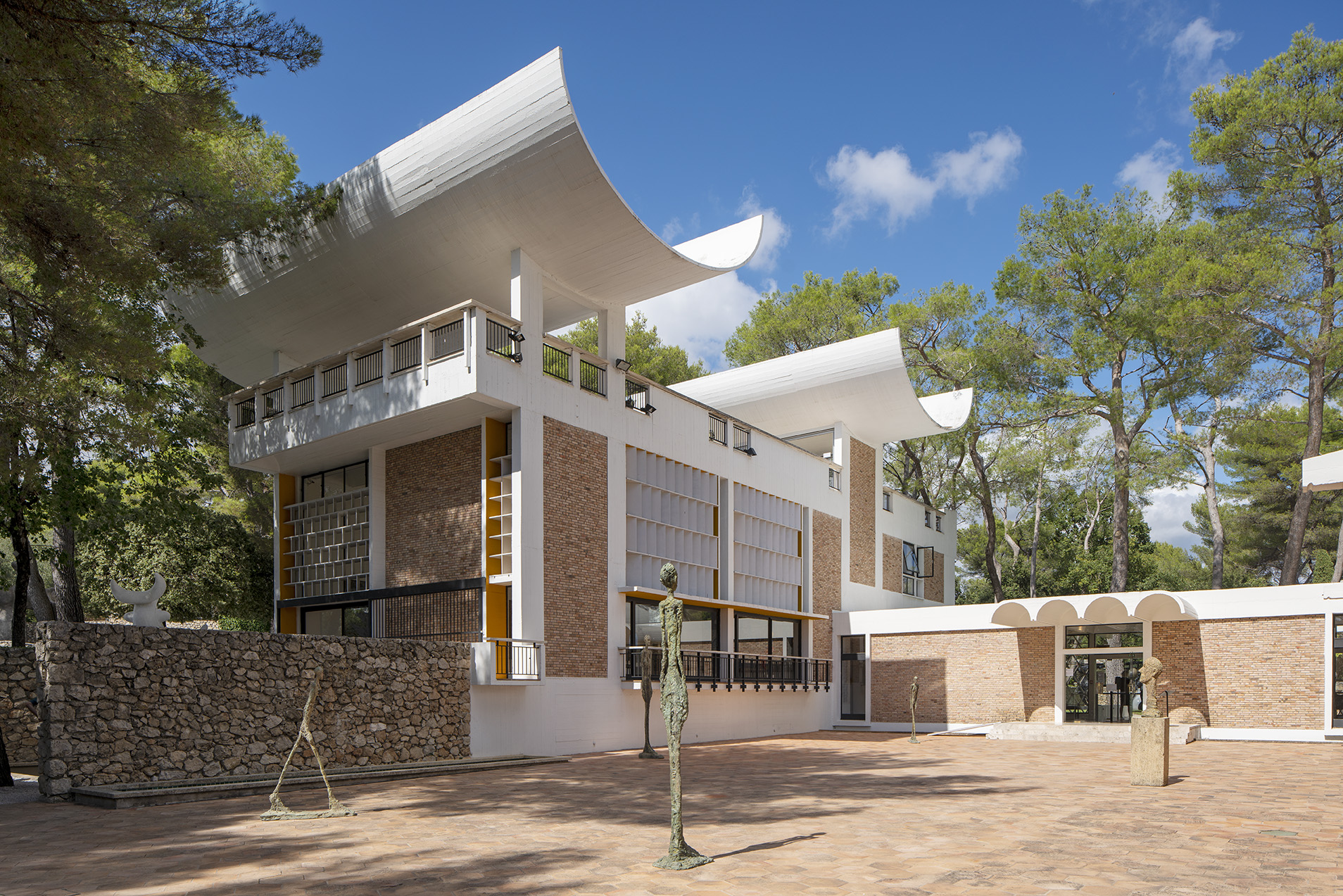
The Martha Graham Technique is alive and well! Currently in the South of France at the legendary Fondation Maeght. MELODRAMA was thrilled to catch up with Christine Dakin, the American dancer who spent decades as one of Martha Graham’s leading principals before becoming the company’s artistic director, to find out what was happening. We met on the morning before her intimate performance of A Peregrination, staged to celebrate the Martha Graham Centenary.
-
PAOLO FANTIN’S MONUMENTAL SHATTERED MIRROR ON LAKE CONSTANCE
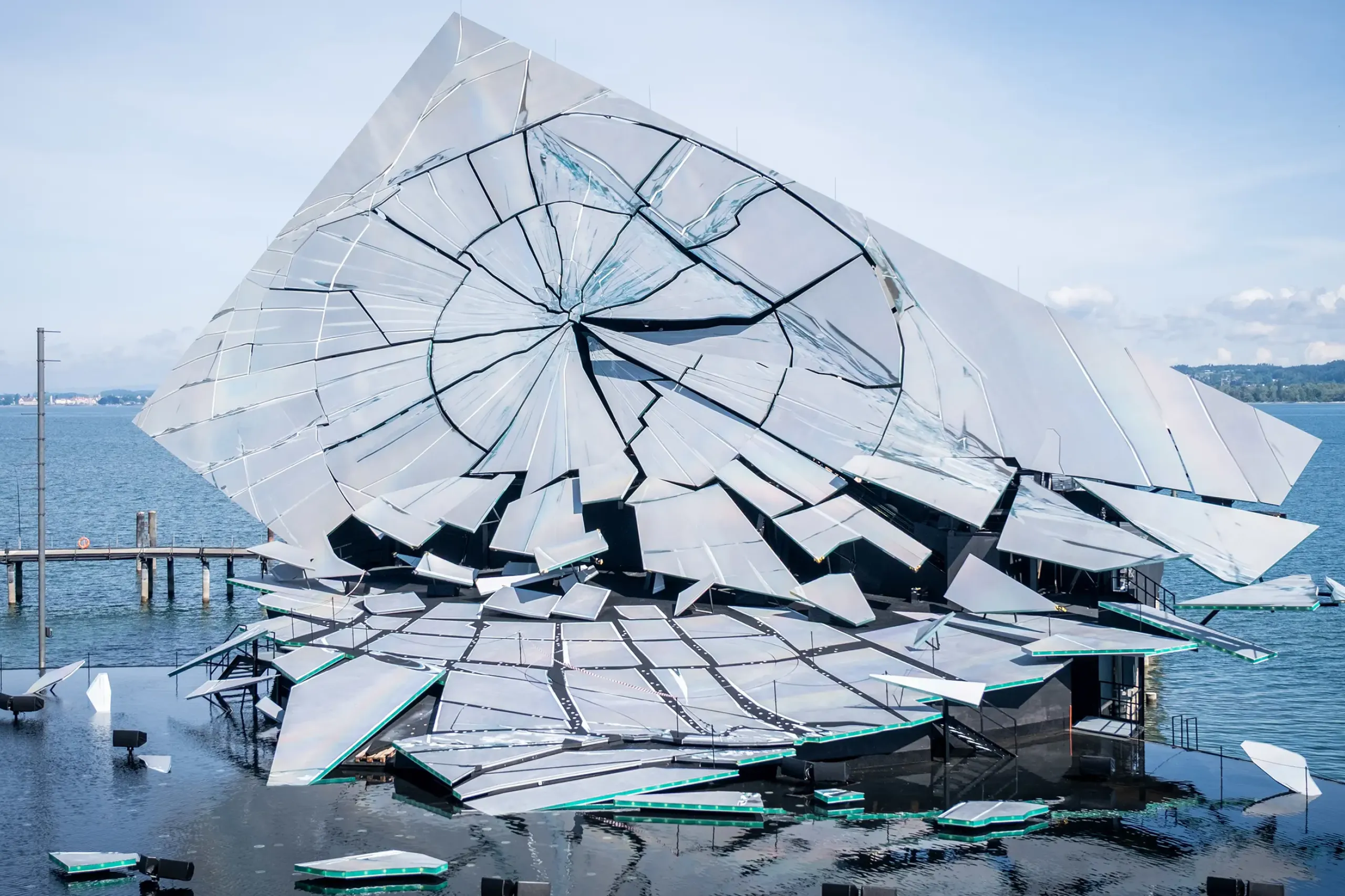
Paolo Fantin is having a rather spectacular year. In February, he designed the Milano Cortina 2026 Winter Olympics Opening Ceremony, and this July will reveal his stage for the legendary and highly coveted Bregenzer Seebühne commission, which sits in the open water of Austria’s Lake Constance.
With this, he is tackling a completely different beast than the traditional theaters Fantin usually works in. The setting requires a monumental piece of high-tech landscape art which in this case took three years of development and a team of engineers to pull off. Fantin tells MELODRAMA about the thrill of building in dialogue with the natural landscape, noting that “there is absolutely no other place in the world that does this kind of stuff.”
For this summer’s production of La Traviata, Fantin has anchored the opera around an idea he has carried around for nine years: a frozen moment of glass shattering over the water. “Violetta looks in the mirror, and the mirror gives her reality, which is the illness,” he explains.
-
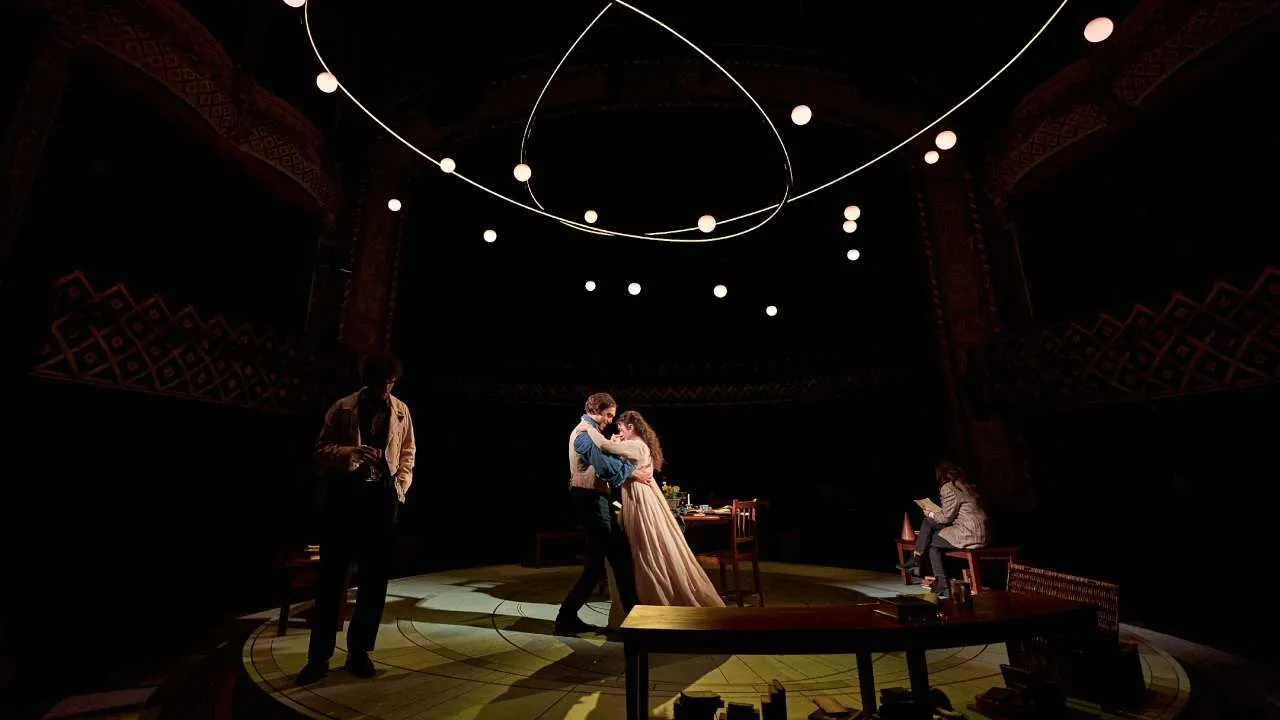
THE SEX APPEAL OF THERMODYNAMICS
I saw Arcadia twice at the Old Vic earlier this year. Long have I admired Stoppard, indeed, when Melodrama asked me who my favourite playwright was I responded – Stoppard – two months later he died, Indian Ink (1995) opened at the Hampstead Theatre, and Arcadia (1993) followed at The Old Vic. A fitting tribute to a polymath and playwright of dazzling lucidity.
-
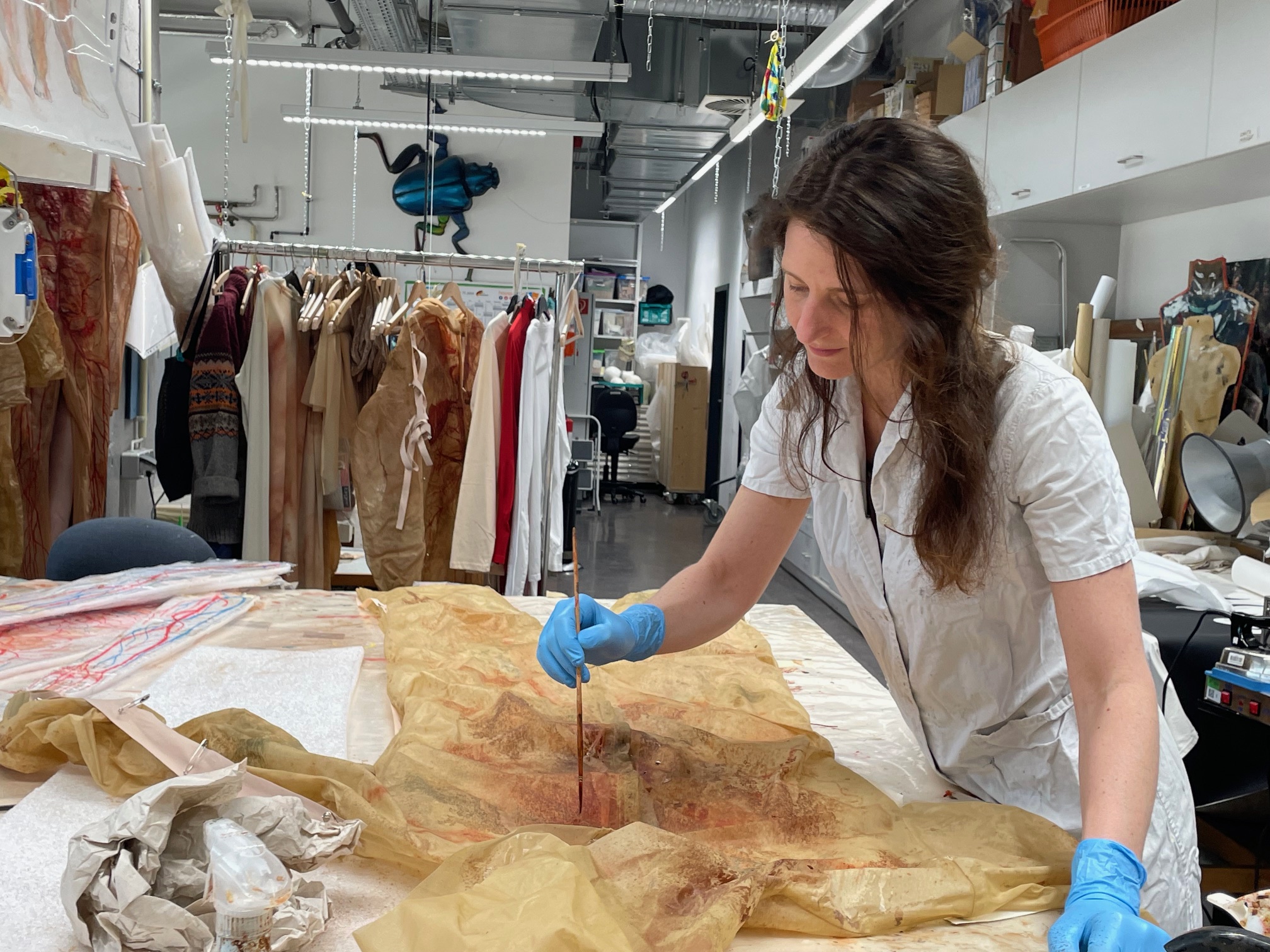
CAMILLE ASSAF: THEATRE AS RESISTANCE
An encounter with the costume sketches of Rococo artist François Boucher in the Bibliothèque-Musée de l’Opéra (Paris Opera Library) shifted Camille Assaf’s path from theory (philosophy) to practice (design): “At that moment everything came into focus.” After training at the Yale School of Drama (years she calls “incredibly formative and also sobering”) and assisting the legendary Japanese designer Eiko Ishioka for the Beijing Olympics Opening Ceremony in 2008, Assaf has built a varied and revered career. A career, which is marked by a deep dedication to research and collaboration with illustrious directors like Peter Sellars and choreographers like Benjamin Millepied.
In a moving conversation in which Assaf talks about the theatre as one of the last true pillars of cultural resistance, MELODRAMA talks to the Paris-based creative about her costume craft and concocting characters.
-
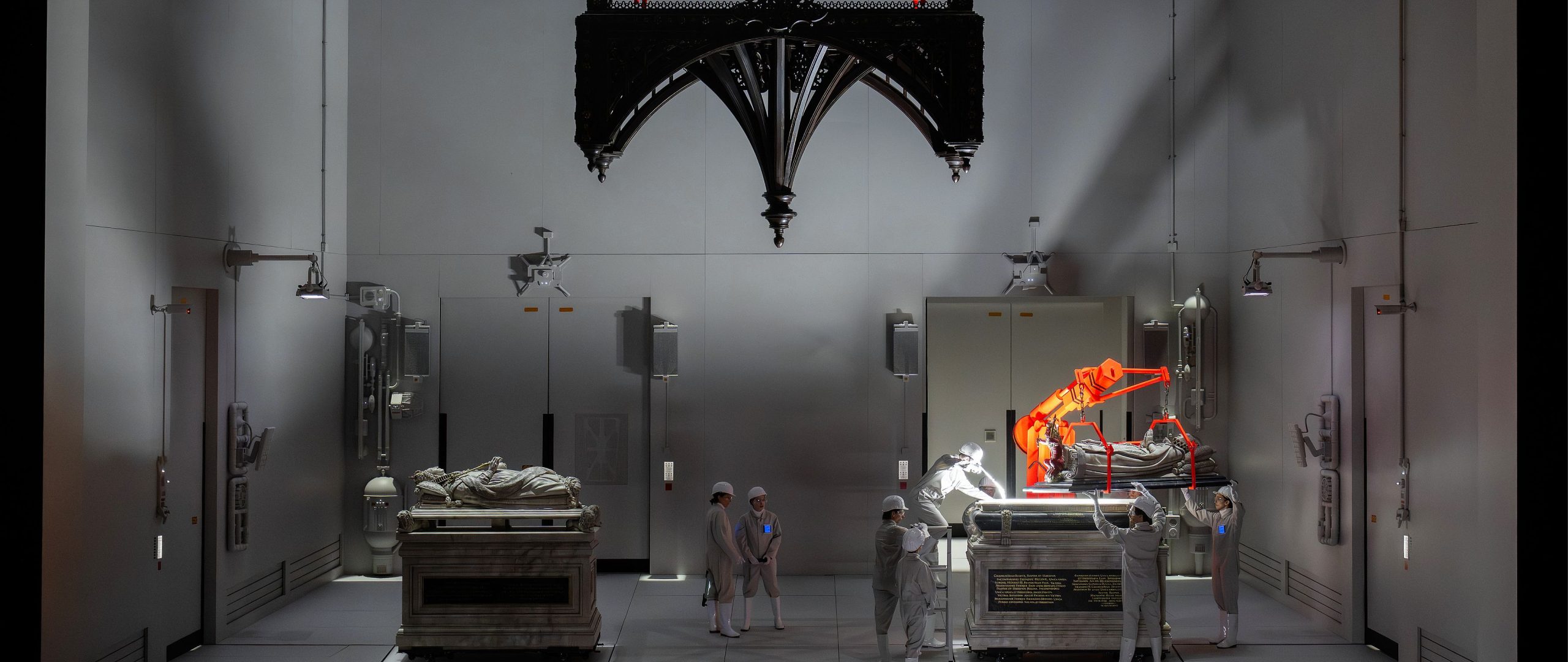
THE AUDIENCE SEES EVERYTHING: STAGE DESIGNER ETIENNE PLUSS ON VISUAL STORYTELLING
Stage design is often a hidden art. While audiences marvel at the final grand result of an opera, few realize the months of drafting, sculpting, and building work that happen before opening night. Etienne Pluss is one of the opera world’s most sought-after stage designers and a master of using physical spaces to tell deep, emotional stories.
MELODRAMA caught up with Pluss to go behind the scenes of his latest project, Of One Blood at the Bavarian State Opera in Munich. He tells us about his several trips to Westminster Abbey to examine Elizabeth I and Mary Stuart’s graves (the two women, who never met, are buried 10 metres apart!) and the six months needed for four sculptors to recreate these tombs for the production.
-
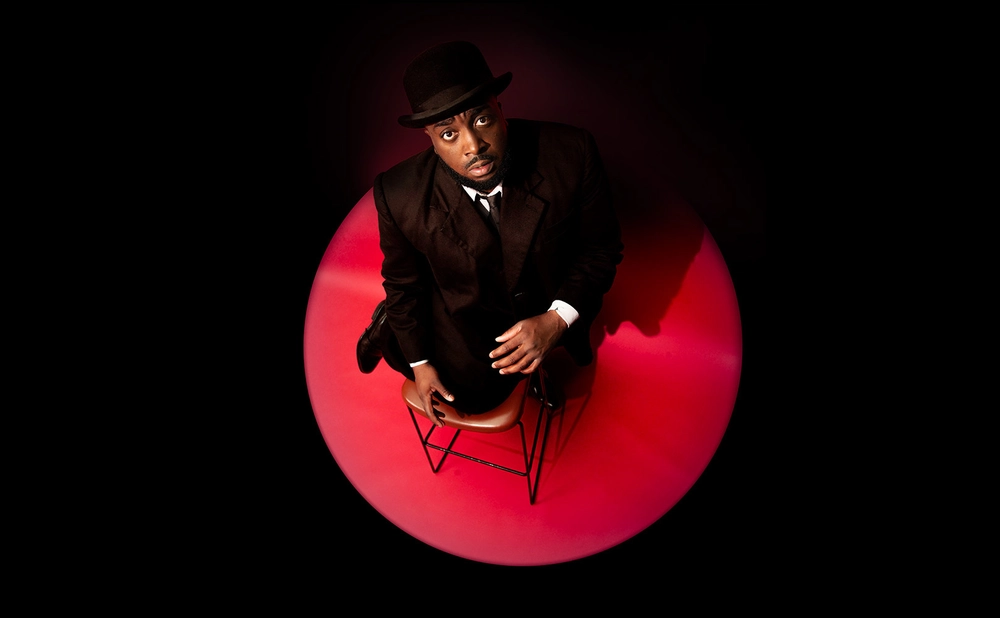
LEO SIMPE-ASANTE: THE NINETEEN-YEAR-OLD UPDATING BECKETT
At nineteen, the Royal Central student Leo Simpe-Asante can already list his work as a composer, poet, playwright, and actor on his resume. He has been writing plays and musicals for ten years and as a self-professed “nerd,” he shares that without a writing project to throw himself into, he would just be sat “twiddling his thumbs.”
This relentless artistic output explains why his short play, Godot’s To-Do List, is currently serving as the curtain-raiser for Gary Oldman’s Krapp’s Last Tape at the Royal Court in London. It is an unexpected but perfect pairing: Beckett’s classic existentialism meets a very comic (and rhythmic) perspective on contemporary anxiety for a generation raised on productivity apps and step-trackers.
Fresh off a frantic few weeks split between a drama school musical showcase (musicals are his “main focus”) and his professional theatre debut, a double life he compares to Spider-Man while Louise Snouck suggests the showbiz of Hannah Montana may be more apt, Simpe-Asante spent a stage combat class break with MELODRAMA to give a peek into his brilliant young mind.
-
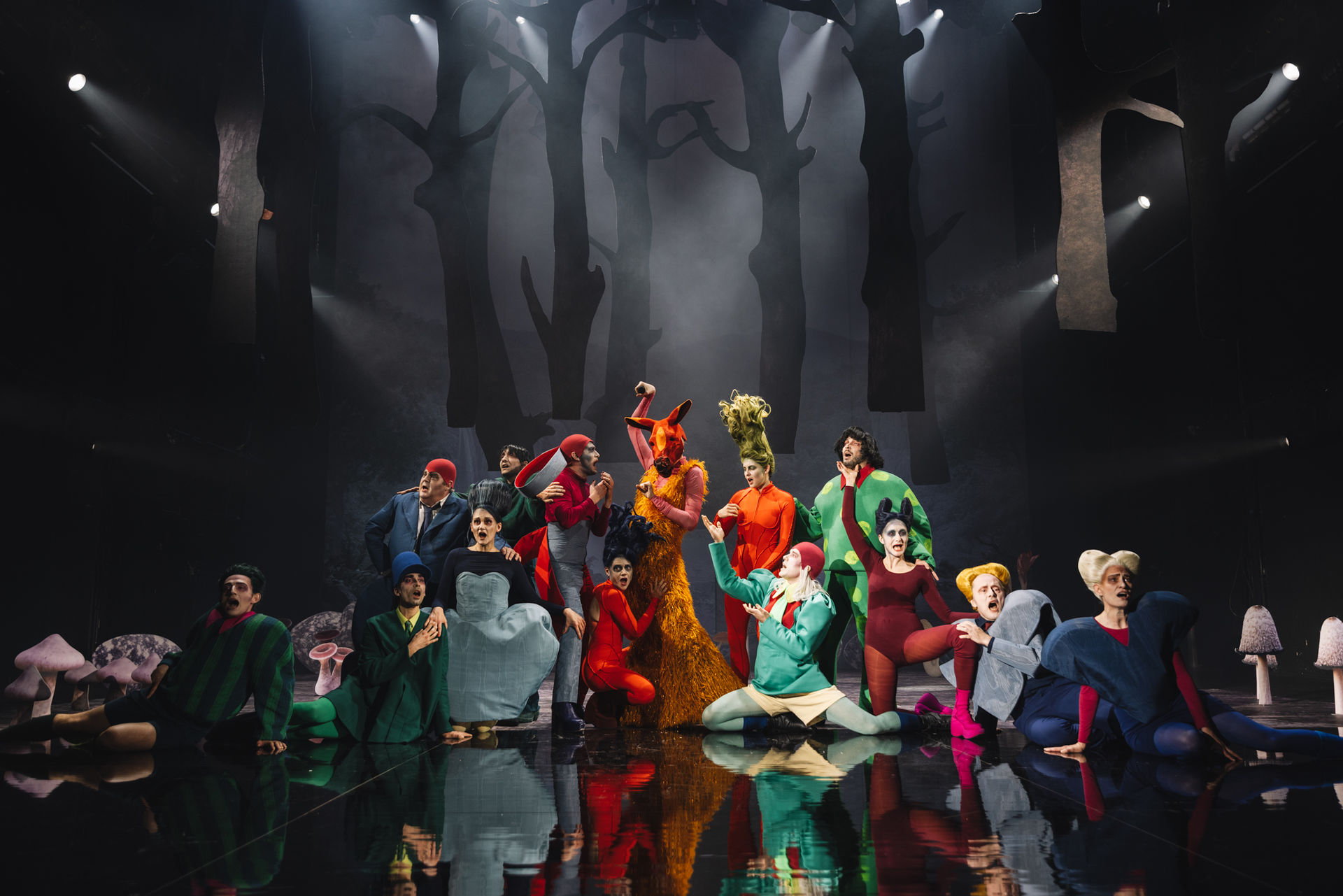
DESIGNER TERESA VERGHO’S NEON-HUED TROLLS AND MECHANICAL DOLLS
Whether she is transforming actors into neon-hued trolls or mechanical dolls, the Berlin-based costume designer Teresa Vergho views the human body as a site of radical construction. Having collaborated with many of the most avant-garde directors of today—from Susanne Kennedy to Ersan Mondtag—Vergho’s work is a study in Tim Burton-meets-Bauhaus surreal eccentricity.
Drawing from a lifelong fascination with everything from action figures and plastic monsters to the people she sees on the subway, her silhouettes bridge the gap between distortion and playful darkness. She speaks with MELODRAMA about the euphoria of working with costume workshops and her most grotesque, fantastical projects.
-
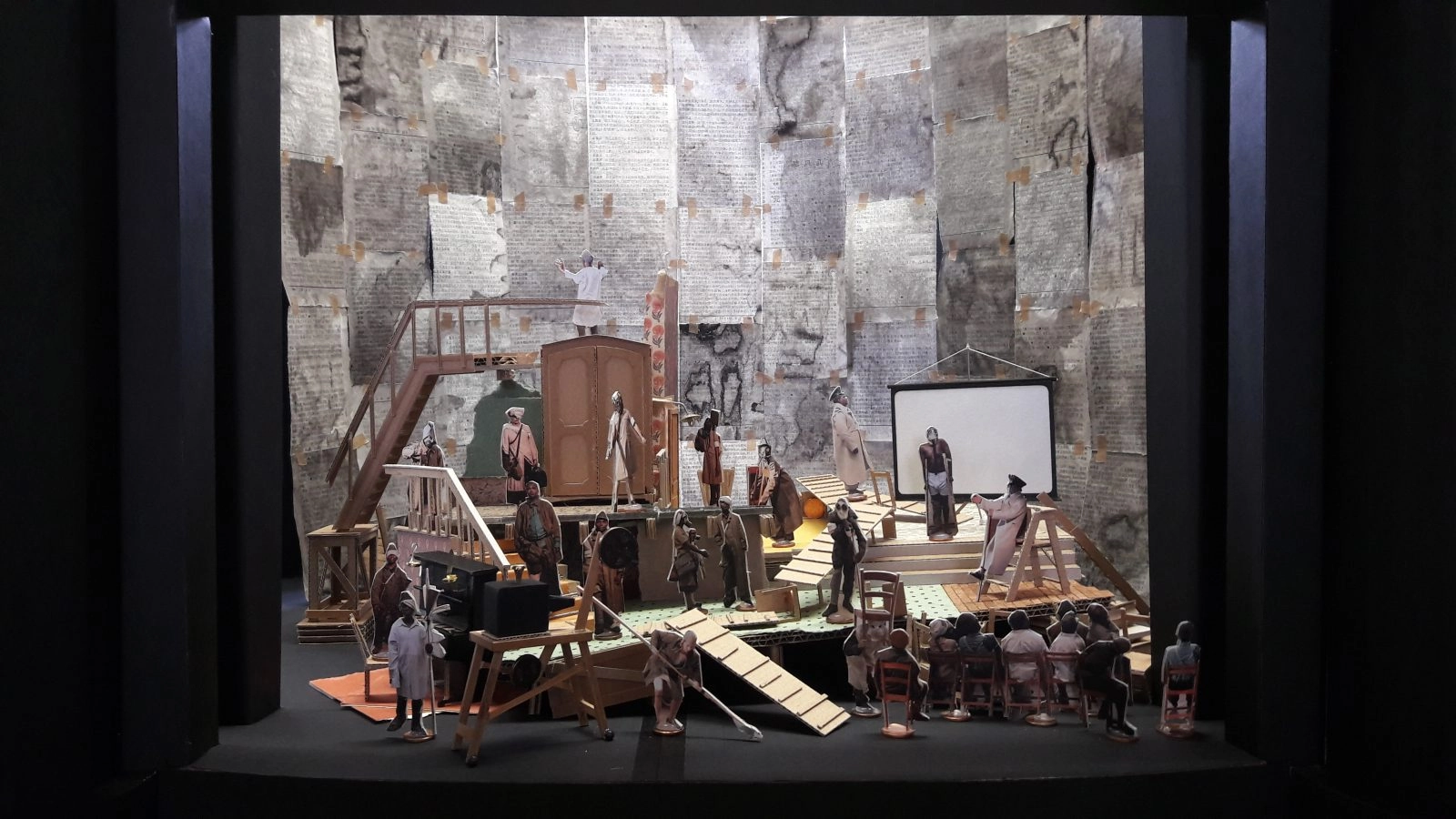
CUTTING, ASSEMBLING, AND BUILDING WITH SET DESIGNER SABINE THEUNISSEN
For over two decades, the Belgian set and exhibition designer Sabine Theunissen has been the close collaborator of renowned South African artist William Kentridge. While his expansive practice wanders across film, drawing, and sculpture, it is their partnership on the stage that has produced some of the most strikingly imaginative productions in contemporary opera.
In an era of digital renderings, Theunissen remains devoted to the physical scale model; hand-built cardboard structures that serve as the “physical core” for every production. Before a project, she will build the model in her studio in Brussels and then travel with it (they are designed to fold up!) to Kentridge’s studio in Johannesburg, where it serves as the central point of the creative process. She describes a workshop environment where the team (costume designer, video editor) gather around her large models to build the universe of a show within it.
As Theunissen and Kentridge prepare for their debut at Glyndebourne—the historic opera house nestled in the glorious English countryside of East Sussex—this summer with a new production of Monteverdi’s L’Orfeo, the designer talks about a shared visual language with Kentridge and the wonderful way she is able to visualise the set at the start: “When I listen to the music, I see images in my head,” she explains. “I know if it’s turning, lifting or collapsing. It’s like walking in a dark forest until your sight adjusts and you find the mystery.”
Book your tickets to see L’Orfeo now for a magical summer’s evening.